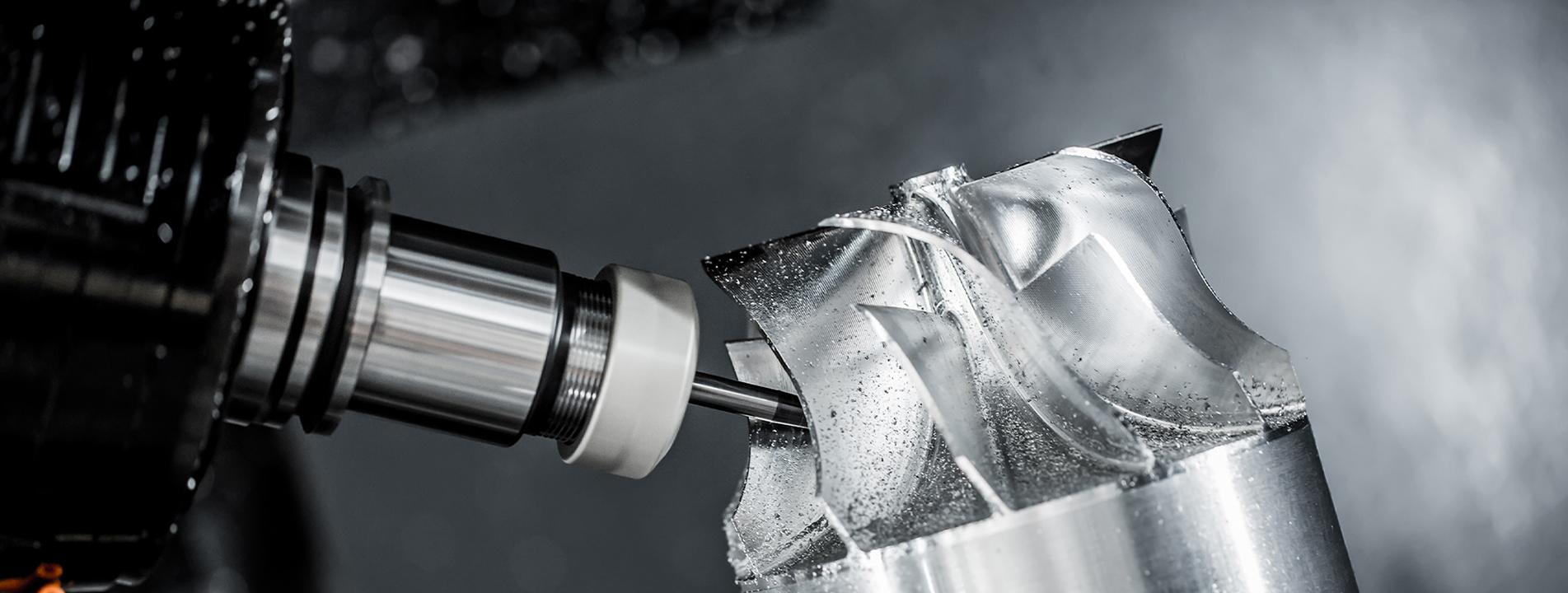
If you've ever shopped for industrial tools, jewelry, or high-performance components, you've likely encountered two terms: tungsten and tungsten carbide. At first glance, they might seem interchangeable—but make no mistake, these are distinct materials with unique properties, advantages, and use cases. Understanding their differences is key to choosing the right one for your project, whether you're machining metal, designing a piece of jewelry, or engineering a critical part for heavy machinery.
What Is Tungsten?
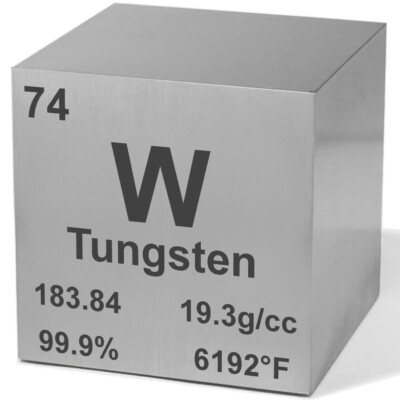
Tungsten, also known by its chemical symbol W (derived from its German name “Wolfram”), is a pure metallic element found naturally in minerals like scheelite and wolframite. It's one of the densest elements on Earth—nearly twice as dense as lead—with an atomic number of 74 and a melting point of 3,422°C (6,192°F), the highest of any metal. This extreme melting point, combined with its exceptional density and corrosion resistance, makes tungsten a standout material in high-temperature and high-stress environments.
In its pure form, tungsten is relatively soft and ductile, meaning it can be drawn into wires or formed into shapes with heat and pressure. However, it's not inherently hard—its strength lies in its resistance to deformation at extreme temperatures and its ability to retain structural integrity under intense thermal stress. Pure tungsten is also highly conductive of electricity and heat, though its brittleness at room temperature (if not alloyed) limits some applications.
Common uses of pure tungsten include:
• Filaments in incandescent light bulbs and vacuum tubes (thanks to its high melting point)
• Electrodes for TIG welding and plasma cutting
• Radiation shielding (due to its high density)
• Heating elements in high-temperature furnaces
• Aerospace components like rocket nozzles and turbine blades
What Is Tungsten Carbide?
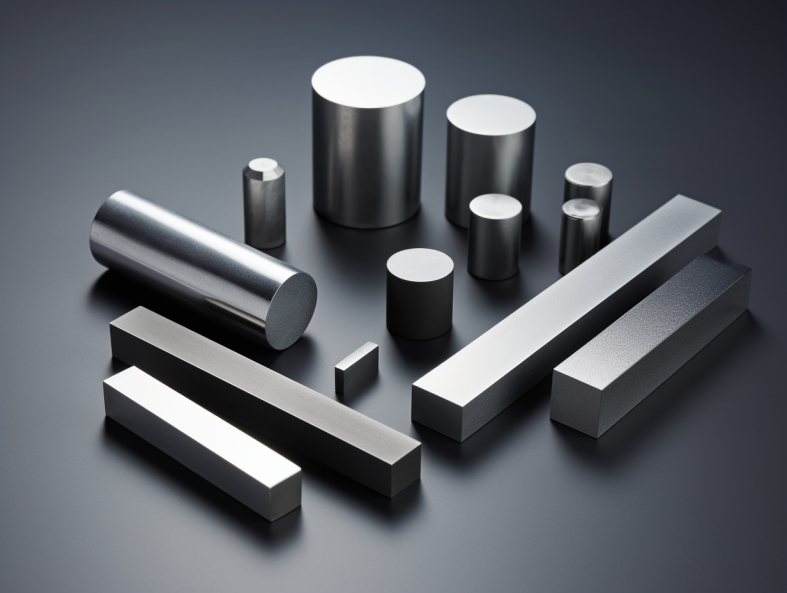
Tungsten carbide (chemical formula WC) is not a pure metal—it's a ceramic-metal composite (cermet) made by combining tungsten powder with carbon powder, then heating the mixture to extremely high temperatures (around 1,400–1,600°C) in a process called sintering. This process fuses the tungsten and carbon atoms into a hard, crystalline structure that's vastly different from pure tungsten.
The defining feature of tungsten carbide is its extreme hardness—it's one of the hardest materials known, scoring between 8.5 and 9 on the Mohs hardness scale (only diamond and cubic boron nitride are harder). It's also highly wear-resistant, corrosion-resistant, and retains its strength at high temperatures (though not as high as pure tungsten). However, tungsten carbide is brittle—while it can withstand heavy impact in compression, it can shatter if subjected to sudden, sharp impacts or bending forces.
To improve its toughness, tungsten carbide is often mixed with small amounts of cobalt (or sometimes nickel) as a binder. The cobalt acts as a “glue” that holds the hard WC particles together, balancing hardness with ductility. The ratio of tungsten carbide to cobalt can be adjusted to tailor the material's properties—higher cobalt content increases toughness but reduces hardness, while lower cobalt content boosts hardness but makes the material more brittle.
Common uses of tungsten carbide include:
• Cutting tools (drill bits, end mills, lathe inserts) for machining metal, wood, and composites
• Abrasive tools (grinding wheels, sandpaper) for finishing and polishing
• Wear parts (nozzles, valves, bearings) in industrial machinery
• Jewelry (rings, bracelets) for its scratch-resistant finish
• Mining and construction tools (drill bits, chisels) for boring through rock and concrete
Key Differences Between Tungsten and Tungsten Carbide
Now that we've defined each material, let's break down their core differences across critical metrics:
1. Composition
• Tungsten: Pure elemental metal (W).
• Tungsten Carbide: Composite material (WC + binder, usually cobalt).
2. Hardness
• Tungsten: Relatively soft (HRC 40–50 when pure); can be hardened via alloying but never reaches the hardness of tungsten carbide.
• Tungsten Carbide: Extremely hard (HRC 85–90); among the hardest man-made materials.
3. Toughness
• Tungsten: Ductile and tough at room temperature; can withstand bending and impact without shattering.
• Tungsten Carbide: Brittle; resistant to compression but prone to cracking under tension or sudden impacts (unless reinforced with cobalt).
4. Melting Point
• Tungsten: 3,422°C (highest of any metal); retains strength at extreme temperatures.
• Tungsten Carbide: Sublimates (turns directly from solid to gas) at 2,870°C; maintains hardness up to ~1,000°C but decomposes at higher temperatures.
5. Density
• Tungsten: 19.3 g/cm³ (very dense, second only to osmium and iridium).
• Tungsten Carbide: 15.6–15.9 g/cm³ (less dense than pure tungsten but still much denser than most metals).
6. Corrosion Resistance
• Tungsten: Highly corrosion-resistant in most environments (acids, bases, saltwater) but can oxidize at high temperatures.
• Tungsten Carbide: Exceptionally corrosion-resistant (even more so than tungsten) due to its ceramic structure; resistant to most chemicals and harsh conditions.
7. Cost
• Tungsten: More affordable than tungsten carbide, especially in pure form.
• Tungsten Carbide: More expensive due to the sintering process and the addition of binders; cost increases with higher WC purity.
When to Choose Tungsten vs. Tungsten Carbide
The choice between tungsten and tungsten carbide boils down to your specific needs:
Choose Tungsten If:
• You need a material that can withstand extreme temperatures (above 1,000°C).
• Ductility and toughness are critical (e.g., wires, welding electrodes).
• You require high electrical or thermal conductivity.
• Cost is a primary concern.
Choose Tungsten Carbide If:
• Hardness and wear resistance are non-negotiable (e.g., cutting tools, abrasive parts).
• You need a material that resists scratches, erosion, or chemical corrosion.
• The application involves high-pressure or high-friction environments (e.g., mining, machining).
• Brittle fracture is not a risk (or can be mitigated with cobalt binding).
Tungsten and tungsten carbide may share a name, but they're worlds apart in composition and performance. Pure tungsten is a high-temperature workhorse prized for its ductility and thermal resistance, while tungsten carbide is a hard-hitting composite designed for wear and tear. Whether you're selecting a tool for your workshop, a component for your engine, or a piece of jewelry that lasts a lifetime, understanding these differences will help you make an informed decision—one that balances performance, durability, and cost.
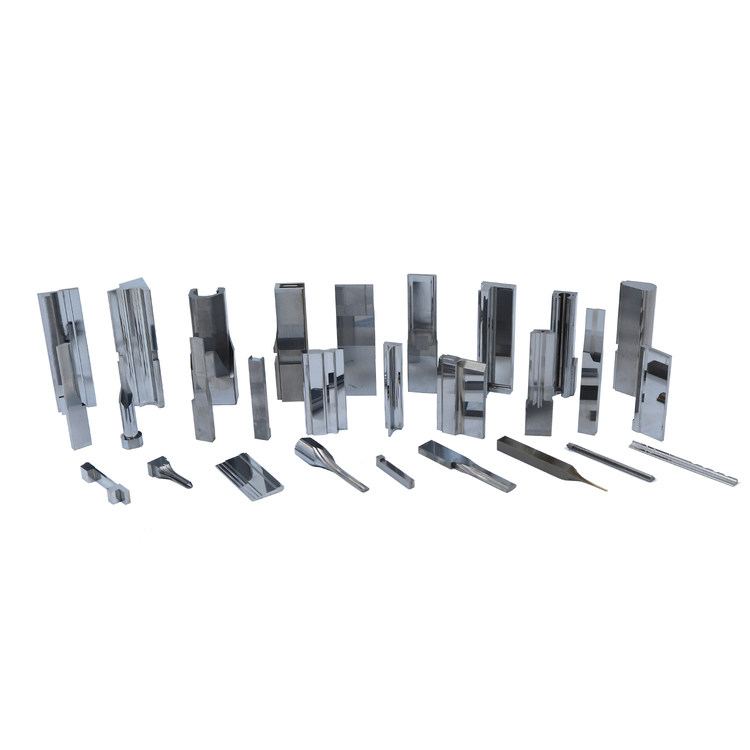
At our company, we specialize in the production of precision tungsten carbide components tailored to meet the most demanding industrial needs. Leveraging advanced processing technologies and strict quality control processes, we craft custom parts that harness tungsten carbide's exceptional hardness, wear resistance, and corrosion resistance—ideal for applications in machining, aerospace, automotive, mining, and beyond. Whether you require precision components or heavy-duty wear parts, our team of engineers works closely with you to deliver solutions that align with your exact specifications. Trust in our expertise to turn tungsten carbide's unique properties into high-performance, long-lasting components for your critical projects.


© 2026 © HONGYU MOULD LIMITED. All Rights Reserved.
 IPv6 network supported