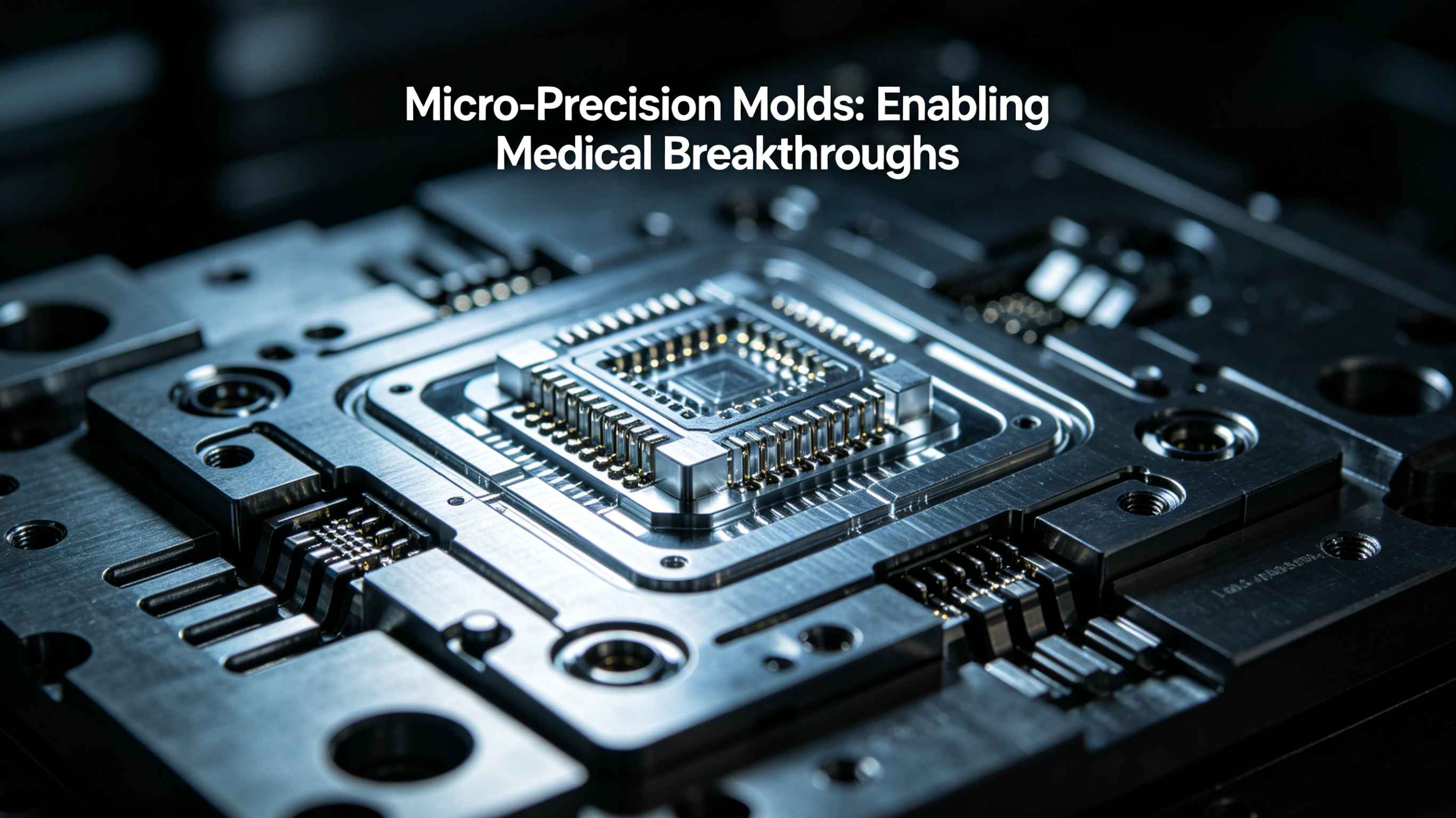
banner
  • Precision Stamping Mold Parts Tolerance Standards: Industry-General Dimensional Datums
    Precision Stamping Mold Parts Tolerance Standards: Industry-General Dimensional Datums Apr 29, 2026
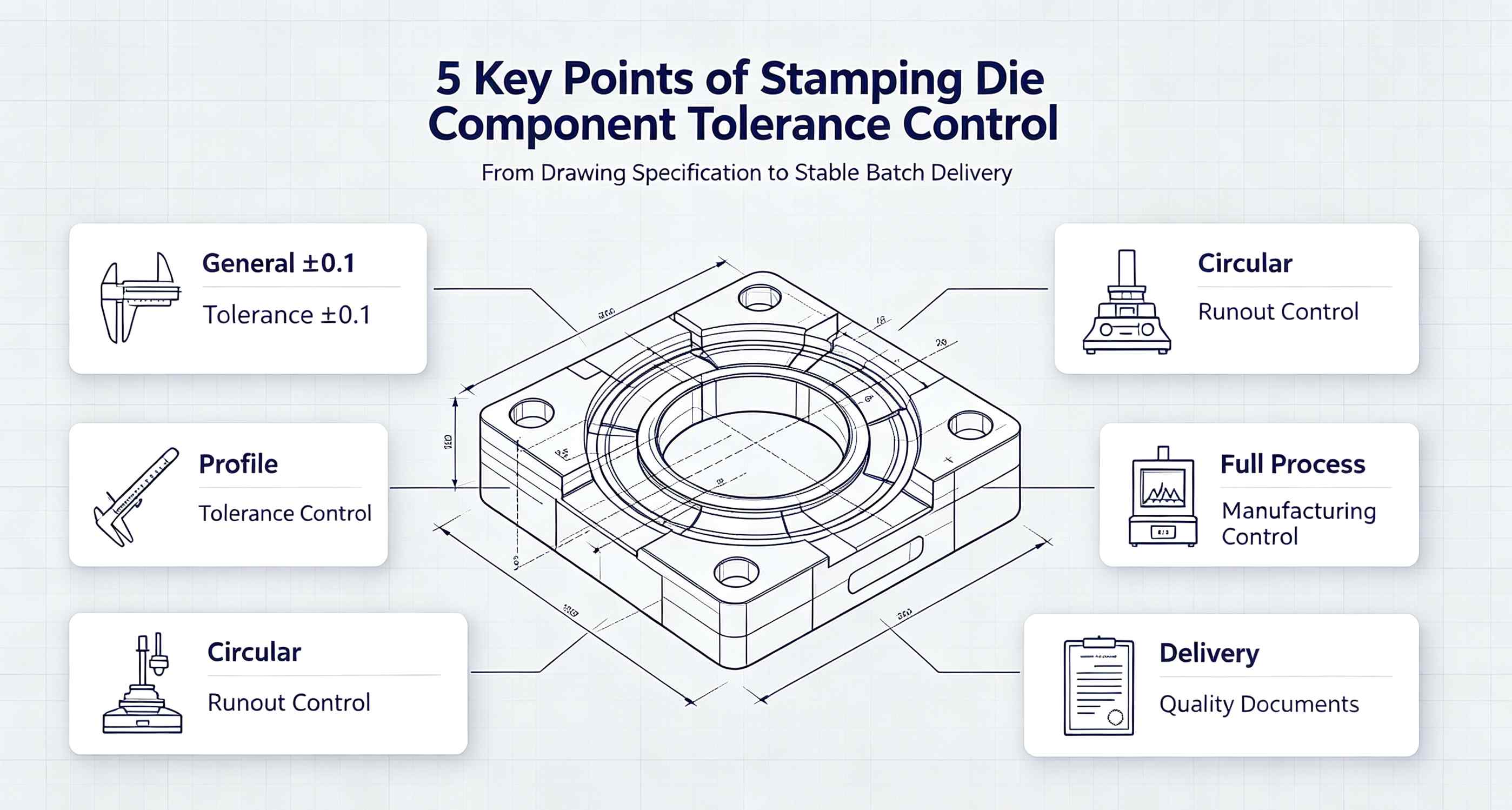
    In precision manufacturing, even minor deviations can cause costly failures or poor assembly. Tolerance standards and dimensional datums are critical for reliable precision stamping mold performance, enabling consistent, high-quality components for automotive, aerospace, electronics.   What Are Tolerance Standards for Precision Stamping Mold Parts? Tolerance standards define allowable variations in mold part size, shape, and position, ensuring seamless functionality and interchangeability. Unlike general stamping, precision stamping requires tight tolerances—typically ±0.001 to ±0.005 inches (±0.025 to ±0.127 mm)—rooted in industry consensus, material behavior, and end-product needs.   These standards balance two key goals: ensuring part interchangeability (for easy batch/manufacturer swaps) and balancing precision with manufacturability, avoiding overly tight tolerances that inflate costs unnecessarily.   Industry-General Dimensional Datums: The Foundation of Tolerance Control Dimensional datums are reference points/lines/planes that standardize tolerance measurements. Without clear datums, precise tolerances become meaningless, leading to misalignment and non-conforming parts. The industry uses a “datum reference frame (DRF)” with three primary datums:   1. Primary Datum (Datum A) The most critical reference (often a flat surface like the mold’s parting surface or base plate bottom), ensuring alignment with the stamping press. It constrains three degrees of freedom (X/Y/Z translation) and sets the baseline for all measurements.   2. Secondary Datum (Datum B) Perpendicular to the primary datum, constraining two more degrees of freedom (X/Y rotation). Typically a side surface, slot, or pin (e.g., a punch shank’s side) to reinforce orientation relative to Datum A.   3. Tertiary Datum (Datum C) Perpendicular to both primary and secondary datums, constraining the final degree of freedom (Z rotation). A small feature (e.g., hole, notch) that fine-tunes position, ensuring full part constraint. Key Industry Standards Governing Tolerances and Datums Global standards provide a common language for manufacturers, ensuring supply chain consistency and clear design communication:   1. ASME Y14.5 (GD&T) The gold standard for geometric dimensioning and tolerancing (GD&T), establishing symbols and rules for part features. Updated in 2018 (reaffirmed 2024), it emphasizes datums for controlling geometric tolerances and is widely used in automotive, aerospace, and electronics.   2. ISO 2768 (General Tolerances) Defines general tolerances for unmarked linear/angular/geometric features, with four classes (F/M/C/V). Most precision mold parts use fine/medium classes, simplifying drawings by reducing redundant tolerance marking. 3. DIN 6930 (Stamped Steel Parts) Tailored for stamped steel, accounting for sheared metal behaviors (e.g., die roll) that affect tolerances. It specifies four accuracy levels for dimensions, concentricity, and symmetry, popular in European automotive/industrial sectors.   4. ISO 8062-3 (Moulded Parts) Focuses on dimensional/geometrical tolerances for moulded parts (including precision stamping molds), defining grades and machining allowances for global consistency.   Common Tolerance Ranges for Precision Stamping Mold Parts Typical ranges balance precision and cost, varying by part function, material, and process: Punches and Dies: Critical surfaces (punch tips, die cavities): ±0.001–±0.005 inches (±0.025–±0.127 mm); non-critical: ±0.005–±0.010 inches (±0.127–±0.254 mm). Guide Pins and Bushings: Diameter/concentricity: ±0.0005–±0.001 inches (±0.0127–±0.0254 mm); clearance: 0.0005–0.001 inches to avoid binding. Mold Bases: Mounting/datum surfaces: ±0.001–±0.002 inches (±0.0254–±0.0508 mm) for press alignment. Blanking/Piercing: Blanking: ±0.05 mm; piercing: ±0.05 mm (diameter/position); precision stamping reduces to ±0.025 mm. Factors Influencing Tolerance Selection Tolerance selection requires balancing four key factors:  End-Product Function: Critical/safety-critical parts (medical/aerospace) need tighter tolerances (often ±0.001 inches) than non-critical components.  Material Properties: Softer materials (aluminum, copper) hold tolerances better than hard materials (high-strength steel), which may require die compensation for springback.  Manufacturing Process: Progressive dies and servo presses enable tighter tolerances; tight-clearance dies (5–10% of material thickness) improve control. Cost: Tolerances tighter than ±0.001 inches require specialized tooling and temperature control, driving up costs exponentially.   In summary, understanding industry-general dimensional datums and tolerance standards is essential for optimizing precision stamping mold performance, reducing waste, and ensuring end-product quality. By adhering to established standards like ASME Y14.5 and ISO 2768, and carefully balancing functional needs with manufacturability, manufacturers can create reliable, cost-effective mold parts that meet the demands of today’s precision-driven industries. As technology advances, these standards will continue to evolve, but their core purpose—providing a consistent, reliable framework for tolerance control—will remain the cornerstone of precision stamping manufacturing.    
  • Differences between Blanking, Bending, and Drawing Dies
    Differences between Blanking, Bending, and Drawing Dies Apr 27, 2026
    Hardware stamping dies are the essential tools in metal forming, with blanking dies, bending dies, and drawing dies being the most widely used types. Although all three belong to the stamping die category, they differ significantly in structural design, working principles, and application scenarios. Accurately distinguishing their characteristics is the key to ensuring stamping quality.   Blanking Die:    The primary function of a blanking die is to separate material, serving as a typical example of a shearing die. It is mainly used to obtain the external profile of a part and forms the basic operation die in stamping processes. The main components include the punch, die (matrix), stripper mechanism, and locating parts. The cutting edges of the punch and die must fit precisely, with strict clearance control to avoid material tearing or excessive burrs. In operation, the press drives the punch down to cut the material along a closed contour, separating it from the stock. The separated workpiece may be a finished part or semi-finished product, while scrap is discharged through the die. Blanking dies have relatively simple structures, often using guide posts and bushings for precision. They are widely used for manufacturing flat parts like shims and flanges, and are ideal for mass production.   Bending Die:    The core function of a bending die is to plastically deform sheet material, forming workpieces with specific angles and shapes. Its structure mainly consists of the punch (upper die) and the die (lower die). The punch tip profile determines the inner geometry of the bend, while the die usually features a V-groove to support the sheet and define the outer bend contour. Some dies are also equipped with positioning stops to ensure bending accuracy. During operation, the sheet is positioned between the punch and die; the punch then presses down, causing the sheet to bend along the desired line. By carefully controlling pressure and punch-die clearance, cracks or springback are avoided. Bending dies can be designed with various punch and die profiles to accommodate different shapes, and are commonly used for processing brackets, connectors, and other angled parts.       Drawing Die:    Drawing dies are used for forming flat blanks into open, hollow components, with the key being control of material flow to avoid wrinkling or cracking. In addition to the punch and die, drawing dies feature a critical component: the blank holder (binder). The blank holder applies uniform pressure to prevent edging from wrinkling during forming and ensures smooth material flow into the die cavity. During operation, the punch presses the blank into the die cavity, causing plastic deformation and forming the hollow part. Drawing dies place stringent requirements on punch and die radii, clearance, and blank holder force control. They are often used for processing hollow products such as stainless steel kitchenware and automotive components. Complex parts usually require multiple drawing steps.     Blanking dies focus on material separation; Bending dies focus on angular plastic deformation; Drawing dies focus on hollow deep drawing forming. Each die type has a structure optimized for its core function and targeted application fields. Mastering these differences allows proper die selection, improves stamping efficiency and product consistency, and meets diversified processing demands of hardware stamped parts.   Our company specializes in manufacturing precision spare parts for all kinds of stamping dies, with over 19 years of professional experience in researching, developing and producing core components for blanking dies, bending dies and drawing dies. Over the past nearly two decades, we have focused on the core needs of stamping die manufacturing, focusing on key parts such as punch, die (matrix), stripper, blank holder, upper die, lower die and die cavity, and have accumulated rich technical experience and mature production processes. We adhere to the principle of "precision first, quality win", adopt advanced numerical control processing equipment and strict quality inspection systems, from raw material selection to finished product delivery, every link is strictly controlled to ensure that each component meets the high-precision requirements of stamping dies. Whether it is standard parts or customized components tailored to customer specific needs, we can provide reliable products and professional technical support. With our profound industry accumulation and customer-oriented service concept, we have won the trust and recognition of numerous stamping die manufacturers at home and abroad, and become a reliable partner for enterprises in the hardware stamping industry to improve production efficiency and product quality.    
  • Processing Key Points of Small-Sized and Precision Parts for Electronic Stamping Molds
    Processing Key Points of Small-Sized and Precision Parts for Electronic Stamping Molds Apr 03, 2026
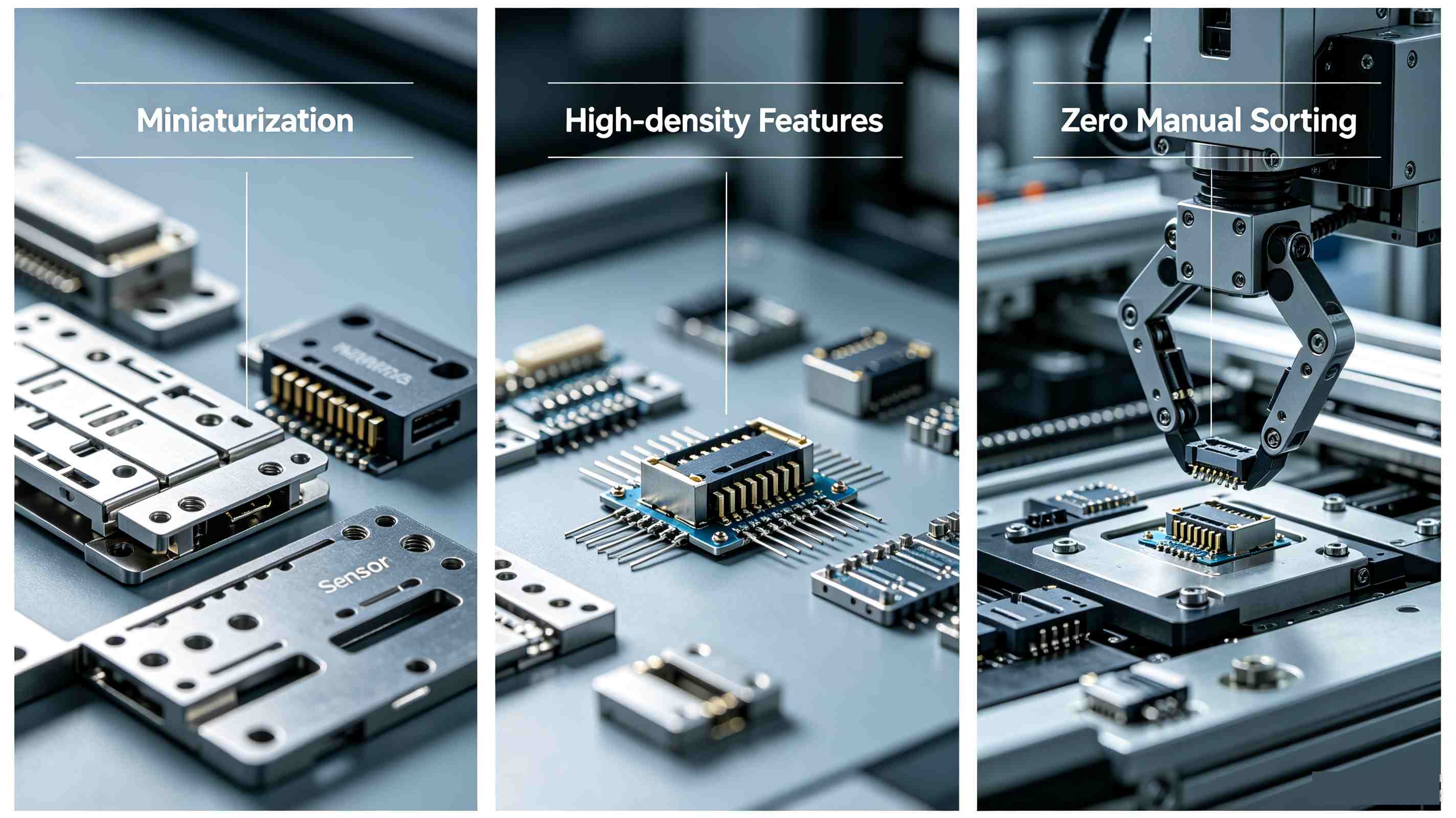
    In the fast-evolving global electronics industry, the demand for miniaturization, high precision, and reliability of electronic products (e.g., smart wearables, automotive electronics) is rising. This drives the upgrading of electronic stamping mold technology, especially small-sized and precision mold parts—core components determining stamping product quality and service life. These small parts (≤5mm, tolerance ±0.01mm) rely on strict process control and advanced technologies to achieve ultra-high precision. Material Selection: The Foundation of Precision and Durability The material of small precision stamping mold parts directly affects their processability, wear resistance, and service life. Unlike traditional stamping molds, electronic mold parts endure high-frequency stamping (thousands of times per hour) and must maintain dimensional stability. Thus, material selection follows the principle of "high precision, hardness, processability, and stability." Common materials and their applications:   High-speed steel (HSS): Widely used for small punches, dies, and guides, offering good wear resistance, machinability, and heat treatment performance. It reaches HRC 62-65 after heat treatment, meeting general electronic mold requirements.   Cemented carbide: Preferred for ultra-precise parts (e.g., micro punches), with hardness up to HRC 85-90 for superior wear resistance. Note its brittleness—handle carefully to avoid cracking. Stainless steel/special alloys: Ideal for harsh environments (high temperature, corrosion). SUS304, SUS316L, and alloys like titanium ensure reliability in complex conditions (e.g., automotive engines).   Key point: Inspect material uniformity, purity, and surface quality upfront. Internal defects (inclusions, cracks) and surface flaws (scratches, rust) cause precision deviations or mold failure.   Precision Machining: The Core of Dimensional Control Small precision electronic mold parts require strict dimensional, shape, and position accuracy—even 0.005mm deviations can fail stamping products. Ordinary machining is insufficient; advanced equipment and processes are needed, focusing on these key links:   Turning and Milling: Ensuring Basic Precision High-precision CNC turning/milling machines (±0.001mm positioning accuracy) process simple-shaped parts (shafts, sleeves, guide pins). Key points:   Clamping stability: Use precision fixtures to reduce deformation. For ultra-small parts (<1mm diameter), use vacuum/magnetic chucks to protect fragile parts and ensure batch consistency.   Cutting parameters: Use diamond/CBN tools for hard materials, reduce feed rates, and apply sufficient cooling to minimize thermal deformation— a major precision factor.   Dimensional inspection: Use micrometers/dial indicators for real-time checks. For ±0.005mm tolerances, use CNC-integrated online inspection to avoid waste.   Wire Electrical Discharge Machining (WEDM): Achieving Complex Shapes and High Precision Complex-shaped parts (micro holes ≤0.1mm, narrow slots ≤0.05mm) rely on WEDM (especially slow wire), which offers high precision, good surface quality, and no cutting force. Key points: Key WEDM process points:    Electrode wire: Use uniform, high-tensile molybdenum/copper wire. Match diameter to part size (down to 0.02mm for ultra-micro parts) to avoid breakage and ensure contour accuracy.   Parameter setting: Adjust pulse width, interval, and current by material/precision. For hard materials, use small pulse width/low current to reduce thermal deformation; slow wire achieves Ra ≤ 0.02μm.   Fixture positioning: Use precision fixtures (pins, V-blocks) for accurate part positioning. For complex parts, use CNC positioning to boost accuracy and efficiency.   Grinding and Polishing: Improving Surface Quality and Precision Post-turning/milling/WEDM, tiny burrs/tool marks affect mold assembly and stamping quality. Grinding and polishing are essential finishing steps:   Precision grinding: Use high-precision grinders to ensure flatness/parallelism. For small/thin-walled parts, use micro-grinding to avoid deformation.   Polishing: Follow "coarse-to-fine" with 1000#-5000# abrasives to reach Ra ≤ 0.01μm. Use uniform force to avoid uneven surfaces. For ≤0.005mm burrs, use plasma/electrochemical deburring.     With a steadfast focus on the field of electronic connectors, Hongyu Mould is fully dedicated to the professional production and manufacturing of stamping mold parts, adhering to the above-mentioned precision processing standards to provide high-quality, reliable products for the electronic industry.  
  • High-Precision Stamping Dies: Hidden Ingenuity in Every Millimeter
    High-Precision Stamping Dies: Hidden Ingenuity in Every Millimeter Mar 27, 2026
    In industrial manufacturing, a difference of just 0.001mm can lead to poor contact in electronic connectors, reduced lifespan of automotive molds, or inaccurate precision in medical devices. High-precision stamping die components are the creators behind these “millimeter-level miracles”—delivering exceptional accuracy and stability to uphold the quality bottom line for industries such as electronics, automotive, and healthcare.   Precision: The “Lifeline” of Precision Manufacturing    The core of high-precision stamping dies lies in the ultimate control of micron-level errors: Forming Dimensions : The minimum forming size can reach 0.014mm (with some inductor molds even achieving stacking precision of 0.002mm), and fitting clearances are controlled within 0.002mm, ensuring a perfect fit even after millions of stamping cycles.   Surface Quality : Through mirror polishing, optical profile grinding, and other processes, a mirror-level surface roughness of Ra0.03 is achieved (equivalent to 1/2000 the diameter of a human hair), greatly reducing the risk of part wear and sticking.   Geometric Tolerances : Flatness and parallelism tolerances can be as tight as 0.0005mm, with combined tolerances of 0.01mm, allowing even complex mold assemblies to fit together with precision.     Stability: The “Ballast” of Mass Production    Beyond precision, stability is the other cornerstone of high-precision molds. hongyu Precision ensures “consistency as new, even after thousands of cycles” with three key safeguards:   Material Selection : Utilization of tungsten steel, ceramics, and medical-grade safe materials balances hardness, wear resistance, and bio-compatibility (for medical use).   Closed-Loop Processes : From EDM (with minimum chamfer R0.04mm), contour grinding, to welding and assembly, every process is equipped with both optical inspection and coordinate measuring, ensuring zero defects leave the facility.   Comprehensive Quality Control: A full life-cycle management system from raw material intake to finished product delivery covers “material–processing–inspection–after-sales,” eliminating concerns about batch variations for our clients.   Hongyu Precision: Your All-in-One Partner in Precision Manufacturing    With over ten years’ expertise in high-precision stamping die component manufacturing, Dongguan hongyu Precision Technology Co., Ltd. (hongyu Precision) delivers one-stop solutions centered on “full-scenario adaptability and customized service.”   Product Portfolio : Products cover electronic connector molds, motor stator and rotor molds, sensor molds, ceramic components, can-end mold assemblies, and more—serving a wide range of industries including electronics, automotive, healthcare, and packaging.   Technical Empowerment : We support personalized requirements such as special-shaped punches, specialized coatings, non-standard mold assemblies, all while adhering to ISO international standards, balancing “efficiency through standardization” with “flexibility through customization.”   Service Philosophy : From requirement analysis through after-sales maintenance, we respond to client needs at every step. Our “efficient, professional, and innovative” approach makes us a reliable manufacturing backbone for customers around the globe.     On the road of high-precision mold parts manufacturing, hongyu Precision continues to “write the answer to industrial quality in every millimeter, with precision as the pen and stability as the ink.” Whether you are an electronics manufacturer in pursuit of extreme precision or an automotive enterprise seeking stable, long-term supply, hongyu Precision is ready to be your trustworthy precision partner, leveraging a decade of technical expertise to help you upgrade your manufacturing capabilities.    
  • How Heat Treatment of Mold Steels Shapes Machining Precision
    How Heat Treatment of Mold Steels Shapes Machining Precision Mar 20, 2026
    In precision mold making, heat treatment is not just about hardness—it directly defines dimensional stability, machinability, and final part accuracy. Even the best CNC machining will fail to hold tight tolerances if heat treatment induces unexpected distortion, residual stress, or uneven microstructure.   Why Heat Treatment Matters for Mold Parts   Mold steels such as P20, H13, SKD61, DC53, Cr12MoV rely on heat treatment to achieve: · Sufficient hardness and wear resistance   · Strength under cyclic load and temperature   · Dimensional stability over millions of cycles   But these benefits come with physical changes that directly impact machining accuracy: volume change, phase transformation, thermal stress, and residual stress.   Key Ways Heat Treatment Affects Machining Precision   1. Dimensional Distortion & Volume Change   Phase transformations during quenching and tempering change the specific volume of steel. · Parts may expand, shrink, bend, or twist   · Holes close, shafts grow, flat surfaces warp   · Typical distortion ranges: 0.05%–0.5% — enough to ruin precision fits   This is why high-precision mold parts are never finished to final size before heat treatment. A machining allowance (stock) must be reserved for post-heat-treatment finishing.   2. Residual Stress Ruins Stability   · Quenching creates extreme internal stress   · Stress relief is critical: untempered parts warp or crack during finish machining   · Residual stress also leads to in-service deformation, destroying longterm precision   Best practice: · Stress relieving after rough machining   · Full tempering immediately after quenching   3. Hardness Uniformity & Machinability   Uneven heat treatment causes:   · Soft spots that lead to chatter, vibration, and poor surface finish   · Hard spots that wear tools quickly and break dimensional consistency   · Inconsistent EDM and polishing results   Uniform hardness = predictable machining = stable precision. Heat Treatment Workflow for Maximum Precision   Follow this sequence to protect accuracy:   1. Stress relief after rough machining   2. Quench + prompt temper to stabilize structure   3. Semi-finish machining with small allowance   4. Optional cryogenic treatment for ultra-stability   5. Final finish machining to tight tolerances   For ultra-precision molds, vacuum heat treatment is strongly recommended:   · Minimizes oxidation and decarburization   · Reduces distortion to <0.001 mm   · Preserves fine surface quality for finishing   Material-Specific Notes   · Pre-hardened steels (P20):Good stability, minimal in-process distortion   · Hot-work steels (H13, SKD61):Sensitive to cooling rate; use marquenching to reduce warpage   · High-chromium tool steels (DC53, Cr12MoV):High distortion risk; must use multiple tempers and slow cooling   Heat treatment is the foundation of precision in mold components. It does not just improve performance—it determines whether your parts stay within tolerance during machining, assembly, and use.   By controlling heating/cooling rates, reducing residual stress, using vacuum processes, and planning machining allowances, you can turn heat treatment from a risk into a precision advantage.   If you work with tight-tolerance mold bases, core pins, or inserts—never skip proper heat treatment planning.
  • EDM Wire Cutting for Complex Tungsten Carbide Shapes: Key Steps to Avoid Overcutting
    EDM Wire Cutting for Complex Tungsten Carbide Shapes: Key Steps to Avoid Overcutting Feb 11, 2026
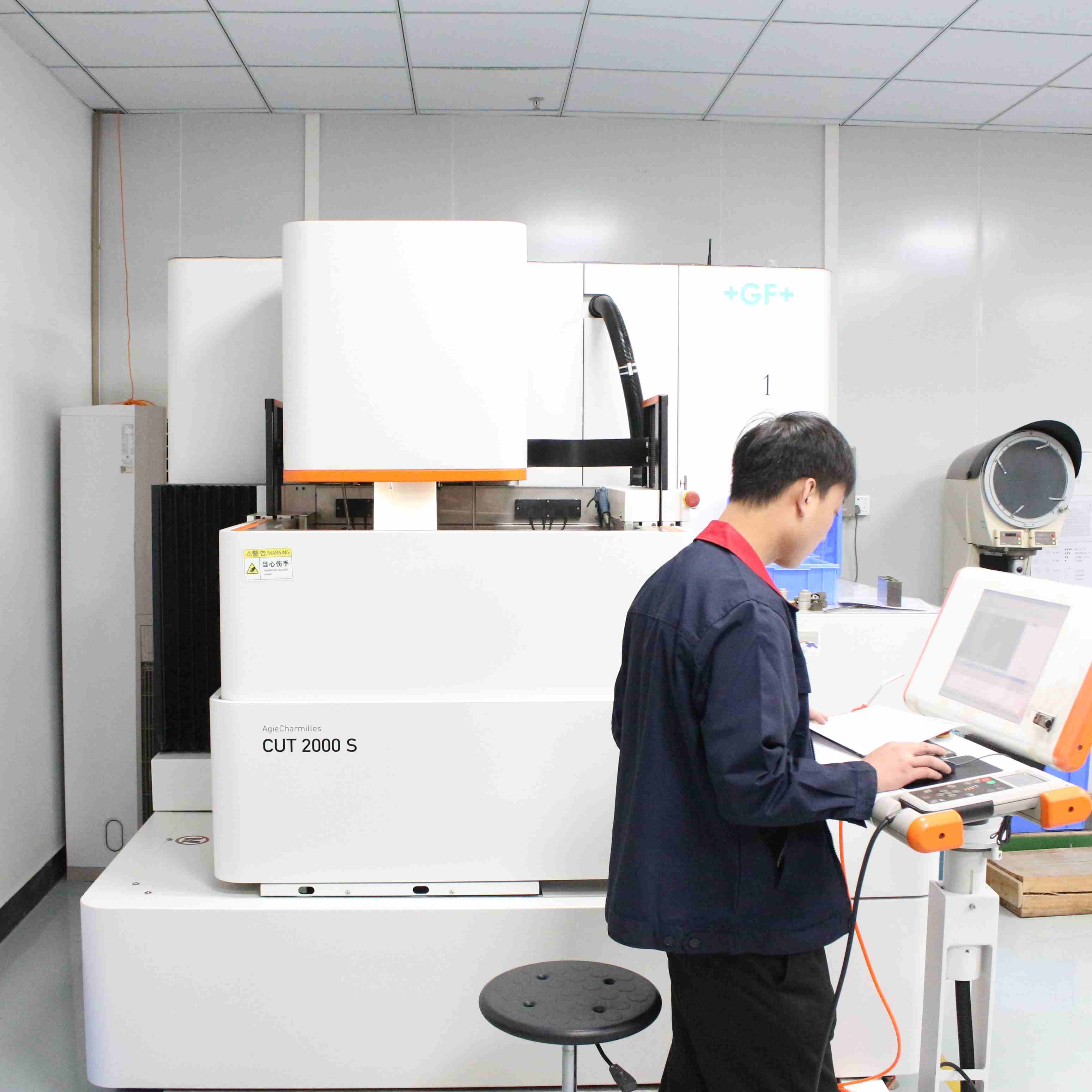
    Tungsten carbide stands as one of the most widely used ultra-hard materials in modern manufacturing, prized for its exceptional wear resistance, high compressive strength, and dimensional stability under extreme operating conditions. For complex, tight-tolerance components—such as custom dies, precision inserts, micro-tools, and contoured mechanical parts—wire EDM (electrical discharge machining) is the one of the most effective processing method, as traditional cutting tools cannot machine tungsten carbide efficiently or accurately. However, a persistent challenge plagues even experienced fabricators: overcutting, which degrades part precision, ruins surface finish, wastes high-cost tungsten carbide blanks, and leads to costly reworks or scrapped parts.   When working with intricate, non-linear, or small-feature tungsten carbide shapes, overcutting is not just a minor error—it can invalidate the entire component. Unlike general steel or alloy machining, tungsten carbide's high hardness and brittleness amplify the risks of EDM overcut, making process control absolutely critical.   Optimize Wire Electrode Selection & Tension Control   The foundation of error-free wire EDM starts with the wire itself. For hard, brittle tungsten carbide, avoid standard brass wires for fine finishing passes; instead, use stratified wires, coated wires, or high-tensile-strength molybdenum wires designed for hard-alloy machining. These wires maintain stable discharge energy, reduce wire vibration, and minimize lateral deflection—one of the top causes of unintended overcut in tight corners and complex curves.   Equally important is constant, precise wire tension. Fluctuating tension causes the wire to sway mid-cut, especially in deep or narrow kerfs common in complex tungsten carbide parts. Modern closed-loop tension systems maintain steady force throughout the cut, preventing the wire from drifting and creating oversized dimensions. For micro-complex shapes, set tension to the manufacturer's recommended range for hard materials, never exceeding safe limits to avoid wire breakage.   Fine-Tune Discharge Parameters (Pulse Settings) for Tungsten Carbide   EDM overcut is directly tied to uncontrolled spark energy and pulse duration. Tungsten carbide requires a low-erosion, high-precision parameter set—not the aggressive settings used for soft metals. Overly strong pulses create larger craters, widen the kerf, and push the wire off-path, resulting in consistent overcut across complex geometries.   To mitigate this:   • Use short pulse-on times and long pulse-off times for finishing passes, limiting spark size and heat input.   • Reduce peak current in semi-finishing and finishing stages to minimize thermal expansion and wire deflection.   • Program adaptive parameter control for corner and radius sections—complex tungsten carbide parts often have sharp internal corners and tight radii, where standard parameters cause excessive overcut. Corner slowdown and power reduction ensure the wire follows the exact toolpath without over-eroding.   Strict Toolpath Programming & Compensation Logic   Poor CAM programming is a leading cause of overcut in complex shapes. For tungsten carbide components, wire radius compensation must be applied accurately, and toolpaths must account for kerf width specific to hard-material EDM. Generic compensation values designed for steel will fail on tungsten carbide, leading to consistent undersize or oversize cuts.     Additional best practices:   • Avoid sharp, sudden direction changes in the toolpath; use smooth transition arcs to reduce wire shake.   • Add multiple skim passes (2–4 passes minimum for complex profiles) instead of relying on a single cut—roughing removes bulk material, while successive skim passes correct dimensional drift and eliminate overcut entirely.   • Simulate the full toolpath in CAM software before cutting to detect collisions, path deviations, or compensation errors that could cause overcut in hard-to-reach features.   Stable Workholding & Vibration Damping   Tungsten carbide blanks are dense and rigid, but poor fixturing introduces movement or misalignment during cutting—even micrometers of shift translate to visible overcut in precision parts. Use custom, low-deformation workholding fixtures, and secure the blank evenly to avoid clamping stress that distorts the material or shifts position mid-process.   Vibration from the machine or surrounding environment also disrupts wire alignment. Isolate the EDM machine from floor vibration, and ensure the worktable, chuck, and wire guides are fully calibrated and rigid. For deep-profile complex parts, use support fixtures to prevent blank chatter, which is a hidden cause of uneven overcut along vertical or angled surfaces.   Accurate Machine Calibration & Maintenance   Even the best programming and parameters cannot overcome a poorly calibrated EDM machine. Regular calibration of wire guides, axis positioning, encoder feedback, and dielectric fluid flow is non-negotiable for tungsten carbide precision machining. Worn or misaligned wire guides cause the wire to run off-center, creating consistent overcut across all features—replace guides at recommended intervals and verify alignment daily for high-precision jobs.   Dielectric fluid quality also impacts cut stability. Clean, deionized dielectric fluid ensures stable, predictable sparks; contaminated fluid causes erratic discharges, widens the kerf unpredictably, and leads to random overcut in complex geometries. Maintain fluid conductivity levels and filtration efficiency to preserve process stability.   Thermal Stability Control   Tungsten carbide has low thermal conductivity, but EDM's localized heat can still cause minor thermal expansion—enough to create overcut in micron-tolerance complex parts. Maintain a consistent ambient temperature around the EDM machine, avoid drafty areas, and allow the blank to reach thermal equilibrium with the machine before cutting. For long-duration cuts on complex tungsten carbide shapes, program periodic pauses to dissipate residual heat and prevent dimensional drift.     Why Overcut Prevention Matters for Tungsten Carbide   Tungsten carbide is an expensive, high-performance material, and scrap parts directly impact production costs and lead times. Complex shapes demand absolute dimensional accuracy—often within ±0.002mm or tighter—leaving no room for overcutting. By following the steps above, fabricators can achieve repeatable, burr-free, precision cuts while maximizing material utilization and part integrity.   Partner with a Trusted Expert for Precision Wire EDM   Achieving perfect, overcut-free wire EDM for complex tungsten carbide shapes requires more than just technical know-how—it demands top-tier machinery, decades of processing experience, and an uncompromising focus on precision.   Hongyu Company specializes in high-precision wire EDM machining, with a core focus on complex tungsten carbide components and ultra-hard material processing. Equipped with advanced, fully automated wire EDM equipment(like AGIE CHARMILLES, Seibu and Sodic), closed-loop control systems, and professional technical teams, we deliver industry-leading dimensional accuracy, smooth surface finishes, and zero-defect processing for even the most intricate profiles. Our strict process control and dedicated focus on EDM optimization ensure zero overcutting, consistent quality, and reliable performance for every tungsten carbide part we produce.     For all your precision wire EDM needs—from complex contours to micro-tolerance tungsten carbide components—Hongyu Company is your trusted partner for accuracy, efficiency, and excellence.You can send your product requirements to our email address chunhe@dghongyumold.com, and we will provide you with the most professional solution within 24 hours.
  • Tungsten vs Tungsten Carbide - What's the Difference?
    Tungsten vs Tungsten Carbide - What's the Difference? Feb 06, 2026
    If you've ever shopped for industrial tools, jewelry, or high-performance components, you've likely encountered two terms: tungsten and tungsten carbide. At first glance, they might seem interchangeable—but make no mistake, these are distinct materials with unique properties, advantages, and use cases. Understanding their differences is key to choosing the right one for your project, whether you're machining metal, designing a piece of jewelry, or engineering a critical part for heavy machinery.     What Is Tungsten? Tungsten, also known by its chemical symbol W (derived from its German name “Wolfram”), is a pure metallic element found naturally in minerals like scheelite and wolframite. It's one of the densest elements on Earth—nearly twice as dense as lead—with an atomic number of 74 and a melting point of 3,422°C (6,192°F), the highest of any metal. This extreme melting point, combined with its exceptional density and corrosion resistance, makes tungsten a standout material in high-temperature and high-stress environments.   In its pure form, tungsten is relatively soft and ductile, meaning it can be drawn into wires or formed into shapes with heat and pressure. However, it's not inherently hard—its strength lies in its resistance to deformation at extreme temperatures and its ability to retain structural integrity under intense thermal stress. Pure tungsten is also highly conductive of electricity and heat, though its brittleness at room temperature (if not alloyed) limits some applications.   Common uses of pure tungsten include:   • Filaments in incandescent light bulbs and vacuum tubes (thanks to its high melting point)   • Electrodes for TIG welding and plasma cutting   • Radiation shielding (due to its high density)   • Heating elements in high-temperature furnaces   • Aerospace components like rocket nozzles and turbine blades                                           What Is Tungsten Carbide? Tungsten carbide (chemical formula WC) is not a pure metal—it's a ceramic-metal composite (cermet) made by combining tungsten powder with carbon powder, then heating the mixture to extremely high temperatures (around 1,400–1,600°C) in a process called sintering. This process fuses the tungsten and carbon atoms into a hard, crystalline structure that's vastly different from pure tungsten.   The defining feature of tungsten carbide is its extreme hardness—it's one of the hardest materials known, scoring between 8.5 and 9 on the Mohs hardness scale (only diamond and cubic boron nitride are harder). It's also highly wear-resistant, corrosion-resistant, and retains its strength at high temperatures (though not as high as pure tungsten). However, tungsten carbide is brittle—while it can withstand heavy impact in compression, it can shatter if subjected to sudden, sharp impacts or bending forces.   To improve its toughness, tungsten carbide is often mixed with small amounts of cobalt (or sometimes nickel) as a binder. The cobalt acts as a “glue” that holds the hard WC particles together, balancing hardness with ductility. The ratio of tungsten carbide to cobalt can be adjusted to tailor the material's properties—higher cobalt content increases toughness but reduces hardness, while lower cobalt content boosts hardness but makes the material more brittle.   Common uses of tungsten carbide include:   • Cutting tools (drill bits, end mills, lathe inserts) for machining metal, wood, and composites   • Abrasive tools (grinding wheels, sandpaper) for finishing and polishing   • Wear parts (nozzles, valves, bearings) in industrial machinery   • Jewelry (rings, bracelets) for its scratch-resistant finish   • Mining and construction tools (drill bits, chisels) for boring through rock and concrete       Key Differences Between Tungsten and Tungsten Carbide   Now that we've defined each material, let's break down their core differences across critical metrics:   1. Composition   • Tungsten: Pure elemental metal (W).   • Tungsten Carbide: Composite material (WC + binder, usually cobalt).   2. Hardness   • Tungsten: Relatively soft (HRC 40–50 when pure); can be hardened via alloying but never reaches the hardness of tungsten carbide.   • Tungsten Carbide: Extremely hard (HRC 85–90); among the hardest man-made materials.   3. Toughness   • Tungsten: Ductile and tough at room temperature; can withstand bending and impact without shattering.   • Tungsten Carbide: Brittle; resistant to compression but prone to cracking under tension or sudden impacts (unless reinforced with cobalt).   4. Melting Point   • Tungsten: 3,422°C (highest of any metal); retains strength at extreme temperatures.   • Tungsten Carbide: Sublimates (turns directly from solid to gas) at 2,870°C; maintains hardness up to ~1,000°C but decomposes at higher temperatures.   5. Density   • Tungsten: 19.3 g/cm³ (very dense, second only to osmium and iridium).   • Tungsten Carbide: 15.6–15.9 g/cm³ (less dense than pure tungsten but still much denser than most metals).   6. Corrosion Resistance   • Tungsten: Highly corrosion-resistant in most environments (acids, bases, saltwater) but can oxidize at high temperatures.   • Tungsten Carbide: Exceptionally corrosion-resistant (even more so than tungsten) due to its ceramic structure; resistant to most chemicals and harsh conditions.   7. Cost   • Tungsten: More affordable than tungsten carbide, especially in pure form.   • Tungsten Carbide: More expensive due to the sintering process and the addition of binders; cost increases with higher WC purity.   When to Choose Tungsten vs. Tungsten Carbide   The choice between tungsten and tungsten carbide boils down to your specific needs:   Choose Tungsten If:   • You need a material that can withstand extreme temperatures (above 1,000°C).   • Ductility and toughness are critical (e.g., wires, welding electrodes).   • You require high electrical or thermal conductivity.   • Cost is a primary concern.   Choose Tungsten Carbide If:   • Hardness and wear resistance are non-negotiable (e.g., cutting tools, abrasive parts).   • You need a material that resists scratches, erosion, or chemical corrosion.   • The application involves high-pressure or high-friction environments (e.g., mining, machining).   • Brittle fracture is not a risk (or can be mitigated with cobalt binding).     Tungsten and tungsten carbide may share a name, but they're worlds apart in composition and performance. Pure tungsten is a high-temperature workhorse prized for its ductility and thermal resistance, while tungsten carbide is a hard-hitting composite designed for wear and tear. Whether you're selecting a tool for your workshop, a component for your engine, or a piece of jewelry that lasts a lifetime, understanding these differences will help you make an informed decision—one that balances performance, durability, and cost.   At our company, we specialize in the production of precision tungsten carbide components tailored to meet the most demanding industrial needs. Leveraging advanced processing technologies and strict quality control processes, we craft custom parts that harness tungsten carbide's exceptional hardness, wear resistance, and corrosion resistance—ideal for applications in machining, aerospace, automotive, mining, and beyond. Whether you require precision components or heavy-duty wear parts, our team of engineers works closely with you to deliver solutions that align with your exact specifications. Trust in our expertise to turn tungsten carbide's unique properties into high-performance, long-lasting components for your critical projects.
  • Types and Classification of Tungsten Carbide Materials
    Types and Classification of Tungsten Carbide Materials Jan 29, 2026
    In the realm of industrial manufacturing, tungsten carbide stands as a cornerstone material, renowned for its exceptional hardness, wear resistance, and high-temperature stability. As an indispensable material for mold parts, cutting tools, and precision components, its diverse types and scientific classification directly determine application efficiency and product performance in aerospace, automotive, mold processing, and precision machinery industries.   Tungsten carbide , essentially a sintered composite material with tungsten carbide (WC) as the main hard phase and metal binders such as cobalt (Co), nickel (Ni), and iron (Fe) as the bonding phase, is classified primarily by binder type, grain size of tungsten carbide, and application field—the three core criteria recognized by the global manufacturing industry. Each classification dimension corresponds to distinct material properties, making it suitable for different industrial scenarios.   By binder type, tungsten carbide s are divided into three classic categories, which form the basic classification framework for the material.   Cobalt-bonded tungsten carbide (WC-Co): The most widely used type, with cobalt as the sole binder. It boasts excellent toughness, impact resistance, and high hardness, and is easy to process and shape. It is the first choice for manufacturing cold heading molds, drawing dies, and general cutting tools in the mold parts industry, and is applicable to the processing of non-ferrous metals, plastics, and general steel materials.    Nickel-bonded tungsten carbide (WC-Ni): With nickel as the binder, it has superior corrosion resistance and oxidation resistance compared with WC-Co, and good dimensional stability at medium and low temperatures. It is suitable for precision components in humid, corrosive industrial environments, such as marine machinery parts and chemical equipment molds.   Tungsten carbide with multi-element binder (WC-Ni-Co/ WC-Ni-Fe): A modified type with nickel-cobalt or nickel-iron as composite binders, integrating the toughness of cobalt and the corrosion resistance of nickel. It has balanced mechanical properties and is widely used in high-demand scenarios such as precision stamping molds and high-speed cutting tools for alloy steel processing.   Tungsten carbide grain size is a key classification criterion affecting the hardness and toughness of the alloy, and the grain size is divided according to the average particle size of WC crystals, which is closely linked to the processing requirements of workpieces.   Coarse-grain tungsten carbide (grain size 2.5-6μm): It has outstanding impact toughness and anti-fracture performance, and low hardness. It is suitable for heavy-load working conditions such as rough machining, large-size mold forming, and rock drilling tools, and can withstand strong impact forces in the processing process.   Medium-grain tungsten carbide (grain size 1.3-2.5μm): The most versatile type with a perfect balance of hardness, wear resistance and toughness. It is the mainstream material for manufacturing standard mold parts, general cutting tools and precision stamping dies, adapting to most medium and fine processing requirements in the manufacturing industry.   Fine-grain tungsten carbide (grain size 0.8-1.3μm): It has high hardness and excellent wear resistance, and slightly reduced toughness. It is suitable for fine machining, precision mold parts (such as micro-sized tungsten steel mold cores for hardware parts) and high-precision cutting tools, which can ensure the high finish and dimensional accuracy of the workpiece.   Ultrafine-grain tungsten carbide (grain size 0.2-0.5μm): The top grade in tungsten carbide materials, with ultra-high hardness (HRA ≥93) and extreme wear resistance. It is specially used for ultra-precision processing, micro-mold manufacturing and high-speed dry cutting tools, and is the core material for high-end precision hardware mold parts processing.   In practical industrial applications, tungsten carbide s are also classified by application field for the convenience of material selection and procurement, which is more intuitive and in line with the actual needs of enterprises.   Mold-grade tungsten carbide: Customized for mold manufacturing, with high dimensional stability and anti-deformation performance. It is divided into cold working mold grade (for stamping, drawing, cold heading), hot working mold grade (for die casting, forging) and precision mold grade (for micro-mold, optical mold), which is the core application type in the hardware mold parts industry.    Cutting-grade tungsten carbide: Optimized for cutting tools, with high red hardness and wear resistance, suitable for turning, milling, drilling and other cutting processes, and matched with different workpiece materials (steel, non-ferrous metals, non-metallic materials) for graded selection.   Wear-resistant-grade tungsten carbide: Focus on wear resistance, with low requirements for toughness, used for manufacturing wear-resistant parts such as nozzles, bearings, and guide rails, and is widely used in auxiliary components of production equipment in the manufacturing industry.   Mining-grade tungsten carbide: With super impact toughness, it is used for manufacturing mining tools such as drill bits and tooth picks, adapting to the harsh working conditions of rock breaking and ore mining.   The selection of tungsten carbide  is a systematic work that needs to combine the working conditions, processing requirements and cost control of the product. For the hardware mold parts processing industry, the key is to balance the hardness and toughness of the material: coarse and medium-grain WC-Co alloys are suitable for heavy-load cold working molds, while fine and ultra-fine-grain alloys are the best choice for high-precision, micro-size mold parts. At the same time, for special working conditions such as corrosion and high temperature, nickel-based or multi-element binder tungsten carbide should be selected to ensure the service life of the mold.   As a professional manufacturer focusing on tungsten carbide  processing, HongYu Company has advanced production equipment, sophisticated processing technology and a complete product system, dedicated to providing high-quality customized processing services of tungsten carbide parts for global manufacturing customers. Our product range covers standard and non-standard tungsten carbide parts including stamping wear-resistant parts, precision mold cores, punches and other hardware mold components.  
  • Precision Enhancement in Wire EDM for Tungsten Carbide Parts
    Precision Enhancement in Wire EDM for Tungsten Carbide Parts Jan 21, 2026
    Tungsten carbide mold parts are critical for high-precision manufacturing, yet their high hardness and brittleness make precision control in Wire EDM a tough challenge. Even micro-deviations can ruin mold performance and lifespan.   Core Equipment & Wire Setup   Wire selection: Zinc-coated brass wires (balanced precision) or molybdenum wires (ultra-precision thin cuts); replace every 8–12h to avoid wear-induced errors.   Tension calibration: 12–18N for 0.25mm wires, 8–12N for 0.15–0.2mm wires; daily laser alignment for wire straightness to eliminate vibration.   Machine calibration: Regularly check linear axes and wire guides, ensure ±0.001mm repeatability and level worktable to prevent taper errors.     Precision-Oriented Process Parameter Tuning   Pulse settings: Low energy for finishing (Ton:2–5μs, Ip:2–5A, Toff:5–15μs) to reduce thermal damage; avoid high energy to prevent micro-cracks.   Flushing optimization: 8–15MPa dielectric pressure (lower for finishing), 20–25°C fluid temperature; align nozzles to discharge gap, use dual nozzles for complex geometries.   Multi-pass strategy: 3 passes (roughing:80–90% material removal; semi-finishing:0.1–0.2mm to eliminate HAZ; finishing:0.02–0.05mm for final precision); add skim pass for ±0.001mm tolerance.     Workpiece Fixturing & Preparation   Use high-precision fixtures (±0.001mm repeatability), avoid over-clamping to prevent residual stress and deformation.   Laser/dial indicator alignment for workpiece-wire path; pre-clean/deburr workpiece, pre-heat thick carbide (>50mm) to 15–20°C to reduce thermal shock.     Inspection & Error Compensation   Cool workpiece to room temp before inspection; use CMM/laser micrometers for precision measurement.   Targeted compensation: increase flushing pressure for taper errors, reduce Ip/Ton for overcutting, add skim pass for poor surface finish.   Adopt closed-loop compensation for batch production to ensure consistent precision.   Common Precision Issues & Quick Fixes   Micro-cracks: Shorten Ton, lower Ip, add semi-finishing pass   Dimensional deviation: Replace worn wire, recalibrate machine, re-align workpiece   Taper in deep cavities: Boost flushing pressure, use dual nozzles, slow machining speed   Rough surface (Ra>0.2μm): Optimize pulse settings, clean nozzles, add skim pass       Boosting Wire EDM precision for carbide molds relies on a holistic, detail-focused approach—integrating wire/machine setup, parameter tuning, strict fixturing and data-driven compensation. Mastering these core optimizations enables consistent ±0.002mm or tighter tolerances, maximizing carbide mold performance and lifespan in high-precision manufacturing.   HongYu boasts mature Wire EDM technology for precision carbide mold components, offering customized machining solutions with tight tolerance control for automotive, 3C, die-casting and other industries. We support your high-end mold production with professional technical expertise and reliable quality.  
  • Tungsten Carbide Mold Parts Grinding: How to Prevent Cracking and Ensure Surface Finish
    Tungsten Carbide Mold Parts Grinding: How to Prevent Cracking and Ensure Surface Finish Jan 15, 2026
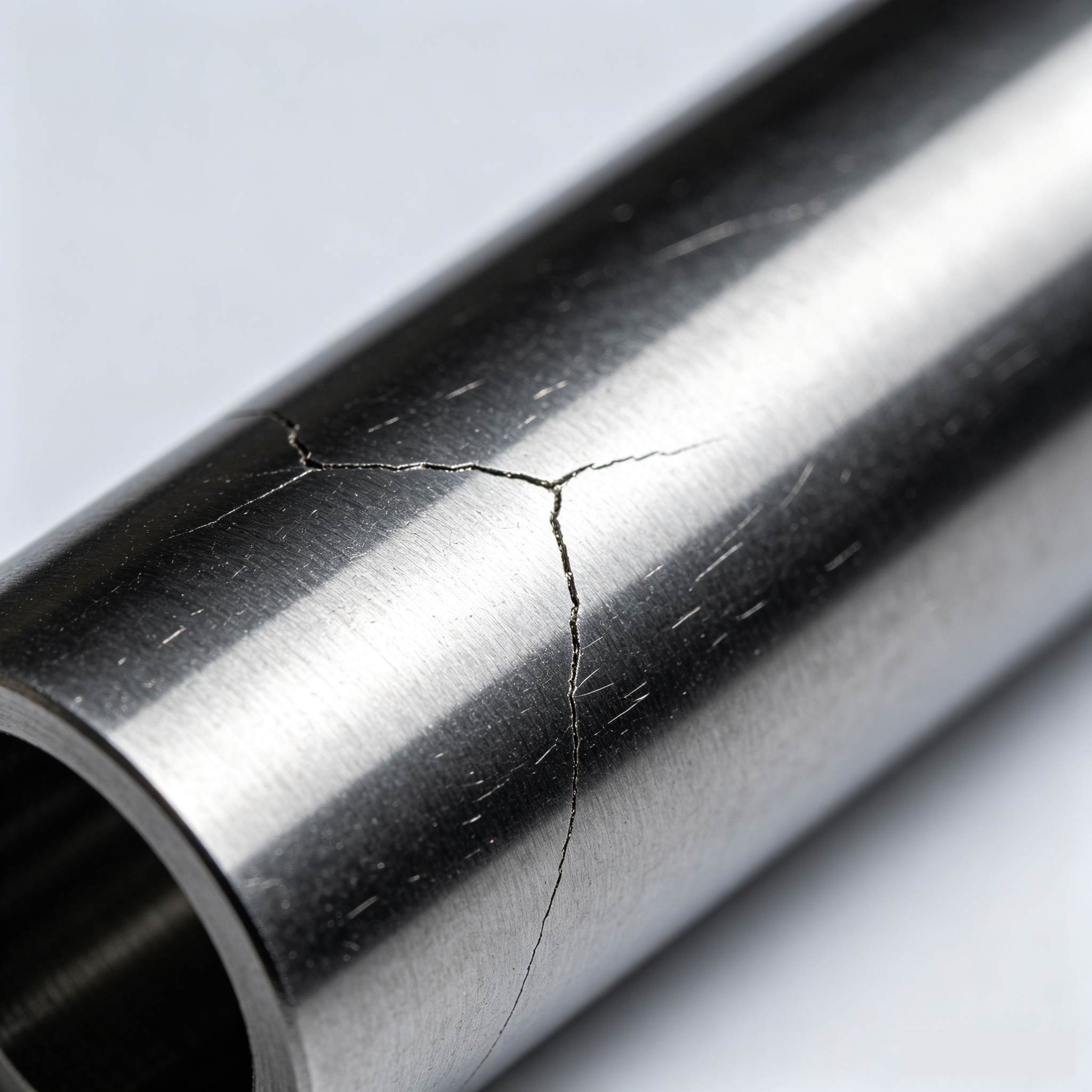
    Tungsten carbide (WC) has become the backbone of high-precision mold manufacturing, thanks to its exceptional hardness, wear resistance, and thermal stability. However, grinding this super-hard material is a double-edged sword—its high brittleness and poor thermal conductivity make it prone to cracking, while its strict application requirements demand superior surface finish. For mold manufacturers, mastering the art of tungsten carbide grinding means balancing precision, efficiency, and defect prevention. We’ll break down actionable strategies to avoid cracking and achieve optimal surface quality, backed by practical insights from real production scenarios.   Why Tungsten Carbide Grinding Is Prone to Cracking?   Before diving into solutions, it’s critical to understand the root causes of cracking. Tungsten carbide’s unique structure—composed of hard WC grains bonded by cobalt—gives it outstanding performance but also creates vulnerabilities during grinding:   • Thermal stress buildup: Grinding generates intense frictional heat, and tungsten carbide’s low thermal conductivity traps this heat at the surface. The resulting uneven expansion and contraction between the surface layer and the core create irreversible thermal stress, leading to micro cracks or even complete fractures .   • Mechanical stress concentration: Sharp corners, thin walls, or structures in mold parts act as stress concentrators. Excessive grinding force or improper tool contact can easily initiate cracks in these weak areas .   • Subpar material or preprocessing: Impure raw materials with high impurity content or unrelieved internal stress from sintering can make the material more brittle and susceptible to cracking during grinding .     Practical Strategies to Prevent Cracking & Improve Surface Finish    Pre-Grinding Preparation: Lay the Foundation for Success   • Optimize part design & material selection: Avoid sharp edges (use a minimum fillet radius of 0.5mm) and reduce thin-walled sections to minimize stress concentration. For complex-shaped mold parts, choose cobalt-rich tungsten carbide grades (e.g., WC-6%Co) for better toughness .   • Preprocess the blank: Conduct low-temperature annealing (150–200℃ for 2–3 hours) to release internal stress from sintering. Inspect blanks for surface defects (e.g., pores, microcracks) using ultrasonic testing—defective blanks should be rejected or repaired before grinding .    Grinding Parameter Optimization: Balance Efficiency & Safety   Grinding parameters directly determine heat generation and mechanical stress. Based on simulations and Taguchi method experiments, the following parameter ranges are proven effective for WC-6%Co mold parts :   • Grinding depth: Limit radial feed to 1–1.8μm per pass. Exceeding 1.8μm drastically increases surface roughness and cracking risk due to excessive stress.   • Feed speed: Maintain a range of 0.5–1.5mm/min. Too high a feed speed causes vibration and tool wear; too low reduces efficiency without significant quality gains.   • Wheel speed: Use higher speeds (3000–4000rpm) to achieve smoother cuts and reduce friction time, as surface roughness has a nonlinear inverse relationship with wheel speed .   • Workpiece speed: Keep it between 100–300rpm to ensure uniform material removal and avoid localized stress buildup.     Tool & Cooling System: Critical for Defect Prevention   • Choose the right grinding wheel: Use resin-bonded diamond wheels with 200–300 mesh for fine grinding. Resin bonds offer better shock absorption than metal bonds, while diamond’s hardness ensures consistent cutting without excessive heat . Avoid alumina wheels, as they wear rapidly and generate more friction heat.   • Upgrade cooling methods: Flood cooling alone is insufficient—adopt a high-pressure coolant system (20–30L/min flow rate) directed precisely at the grinding contact zone. This not only dissipates heat but also flushes away abrasive chips to prevent scratching . Select coolants with high thermal conductivity and lubricity to reduce friction between the wheel and workpiece.   Post-Grinding Treatment: Stabilize Quality & Performance   • Stress relief annealing: After grinding, perform low-temperature aging at 180℃ for 2 hours to release residual stress, preventing delayed deformation or cracking during storage or use .   • Surface finishing: For mirror-like surface requirements, follow grinding with ultrasonic polishing using 4000-grit diamond paste. This removes micro-imperfections without introducing new stress .   When it comes to tungsten carbide mold parts grinding, precision and reliability are non-negotiable. Hongyu Mould Co., Ltd. specializes in high-precision tungsten carbide component processing, leveraging over a decade of industry experience and advanced grinding technology. Our team of skilled engineers strictly follows the above-proven processes—from raw material inspection and parameter optimization to post-processing stress relief—to ensure every part is crack-free, dimensionally accurate, and meets the highest surface finish standards.     Whether you need complex mold cores, wear-resistant inserts, or custom tungsten carbide parts, we tailor our processes to your specific requirements, delivering consistent quality and on-time delivery. With a focus on reducing scrap rates and optimizing production efficiency, we’ve become a trusted partner for mold manufacturers worldwide.   Choose Hongyu Mould for your tungsten carbide machining needs—where technical expertise meets uncompromising quality. Contact us today to discuss your project!
  • How to Reduce the Impact of Mold Components on Flash Formation in Stamped Products
    How to Reduce the Impact of Mold Components on Flash Formation in Stamped Products Jan 07, 2026
    Flash is a common yet costly defect in stamping manufacturing, directly undermining product precision, aesthetic quality, and production efficiency. While factors like stamping pressure and speed play roles, mold component quality, fit, and maintenance are the core determinants of flash occurrence. For manufacturers focusing on precision stamping mold parts, targeted optimization of these components is the most direct and effective way to minimize flash-related issues.          Here are actionable strategies to reduce the impact of mold components on flash:   1. Prioritize High-Precision Components with Tight Tolerances   The foundation of flash-free stamping lies in the dimensional accuracy of core mold components. For punch and die inserts, even a 0.001mm deviation can create micro-gaps where material seeps out during stamping. Opt for inserts made from high-hardness materials like SKD11 or tungsten carbide, which resist deformation under high stamping forces and maintain tight mating tolerances over long production runs. For guide pillars and bushings, choose chrome-plated or nitride-coated options with precision-ground surfaces to ensure perfect mold alignment—misalignment is a top cause of uneven flash along the parting line. Ensure that ejector pins and sleeves have optimized clearance (0.002–0.005mm for precision applications) to eliminate leakage paths for molten or malleable material during the stamping cycle.        2. Establish a Regular Maintenance and Replacement Schedule   Wear and tear are inevitable for mold components subjected to repeated stamping impacts, but neglecting maintenance accelerates flash formation. Develop a preventive maintenance plan tailored to production volume: clean guide pillars and bushings daily to remove metal debris and re-lubricate them to reduce friction and wear; inspect punch and die edges weekly for chipping or blunting, and sharpen or replace them immediately if damage is found; replace ejector pins and springs every 50,000–100,000 cycles, depending on the material being stamped. For parting line locks and stops, calibrate clamping force monthly to ensure uniform pressure distribution, which eliminates localized gaps that lead to flash.        3. Optimize Component Assembly and Alignment   Precise assembly is just as important as component quality in preventing flash. During mold assembly, use precision alignment tools to ensure that the punch and die are perfectly centered, and that guide pillars are perpendicular to the mold base. Even a slight angular deviation can create uneven gaps along the parting line, resulting in persistent flash. For large stamping molds, use laser alignment systems to verify the parallelism of mold halves before locking them in place. Additionally, ensure that all fasteners are tightened to the recommended torque to prevent component shifting during high-pressure stamping operations.     4. Customize Component Design for Specific Stamping Materials   Different stamping materials—from thin-gauge steel to aluminum alloys—have varying levels of ductility and flow characteristics, which impact flash formation. Work with your engineering team to customize mold components for the materials you process: for soft, ductile materials, use punch and die inserts with tighter clearances and polished surfaces to minimize material adhesion; for hard, high-strength metals, opt for wear-resistant components with reinforced edges to prevent deformation. This tailored approach ensures that mold components work in harmony with the stamping material, reducing the risk of flash without compromising production speed.                        Reducing the impact of mold components on flash formation is not a one-time fix—it requires a holistic approach of precision component selection, rigorous inspection, proactive maintenance, and customized design. By focusing on these strategies, manufacturers can significantly cut down on flash-related rework and waste, improve product quality, and enhance overall production efficiency. In the competitive world of precision stamping, every component detail counts—and mastering these details is the key to achieving consistent, flash-free results.       Hongyu Mould stands out as a trusted partner in solving flash-related challenges with distinct advantages tailored to precision mold manufacturing. First, we boast advanced precision machining capabilities, producing core and cavity inserts, guide pillars, and ejector components with ultra-tight tolerances, ensuring seamless mating surfaces that eliminate micro-gaps at the source.Second, we prioritize high-performance materials, utilizing tungsten carbide, heat-treated tool steel, and chrome-plated alloys that resist deformation and wear even under extreme molding pressures and temperatures, maintaining component integrity over thousands of production cycles.Third, our professional engineering team offers customized solutions—from optimized ejector clearance design to parting line clamping force calibration—addressing the unique flash pain points of each client’s mold system. Finally, we provide end-to-end technical support, including post-delivery component inspection and maintenance guidance, to ensure long-term production for our partners.Choosing Hongyu Mould means investing in reliable, high-precision mold components that elevate product quality and streamline manufacturing efficiency.  
  • Key Factors Affecting the Precision of Stamping Mold Components Machining
    Key Factors Affecting the Precision of Stamping Mold Components Machining Dec 31, 2025
    In the precision manufacturing industry, stamping mold components are the core of high-quality, high-efficiency mass production, widely used in automotive, electronics, aerospace and hardware fields. The machining precision of these components directly determines the dimensional accuracy, surface quality of stamped products and the service life of molds. Even tiny errors can lead to defective products, increased production costs and reduced production efficiency.   First and foremost, material selection is the foundational factor affecting machining precision. Stamping mold components often bear high impact, friction and extrusion during use, so the material’s physical and chemical properties directly influence machining stability and final precision. High-quality materials with uniform composition, stable hardness and good machinability (such as tungsten carbide, high-speed steel and alloy steel) can reduce deformation and errors during cutting, grinding and other processes. In contrast, materials with impurities, uneven hardness or poor toughness are prone to warping, cracking or edge collapse in machining, leading to reduced precision. For high-precision stamping scenarios, selecting premium materials with consistent performance is the first step to ensure machining precision.   Secondly, machining equipment and tooling accuracy is a core guarantee for stamping mold components precision. Precision machining of mold components relies on high-performance CNC machine tools, grinders, EDM machines and other equipment. The running accuracy of equipment (including positioning accuracy, repeat positioning accuracy and spindle rotation accuracy) directly affects the dimensional tolerance and shape accuracy of workpieces. Outdated or uncalibrated equipment will accumulate errors during long-term operation, resulting in substandard component precision. Meanwhile, the quality of cutting tools and grinding wheels is equally critical—sharp, wear-resistant and high-precision tools can ensure smooth cutting, reduce tool wear-induced errors and improve surface finish. Regular maintenance, calibration of equipment and replacement of worn tools are essential to maintain stable machining precision.     Thirdly, machining process and parameter setting is a key link that cannot be ignored. Reasonable process planning can avoid cumulative errors caused by improper operation sequences. For example, rough machining and finish machining are separated to reduce the impact of machining stress and thermal deformation on precision; multi-step machining with small cutting amounts is adopted for high-hardness materials to ensure dimensional stability. In addition, rational setting of machining parameters (cutting speed, feed rate, cutting depth) is vital. Excessively high cutting speed or feed rate will generate excessive cutting heat, leading to workpiece thermal deformation; overly large cutting depth may cause tool vibration, resulting in surface roughness and dimensional errors. Adjusting machining parameters according to material properties and component structures can effectively improve machining precision.   Fourthly, machining stress and thermal deformation are important hidden factors affecting precision. During the machining process, cutting force and cutting heat will cause internal stress and thermal expansion of the workpiece, leading to subtle deformation. For thin-walled, small-sized or high-precision stamping mold components, such deformation is more obvious and will affect the final precision after cooling or stress release. Adopting stress relief treatments (such as annealing) before machining, using cooling lubricants during machining to reduce cutting heat, and arranging sufficient cooling time after machining can effectively reduce the impact of stress and thermal deformation, ensuring component precision stability.   Fifthly, full-process quality control and testing methods are the final barrier to ensure precision. Precision control cannot be separated from strict inspection throughout the whole process, from raw material screening to semi-finished product machining and finished product delivery. Using high-precision testing equipment (such as coordinate measuring machines, hardness testers and surface roughness meters) to conduct multi-dimensional detection on components can timely find machining errors and adjust processes in time. Establishing standardized quality inspection procedures, setting clear precision standards and conducting regular sampling inspections can avoid defective products from flowing into the next process, ensuring the consistency and reliability of stamping mold components precision.   Finally, the professional quality of technical operators also plays an important role in machining precision. Skilled operators can accurately operate equipment, adjust parameters according to actual machining conditions, and find and solve small problems in time. Regular training for operators on equipment operation, process knowledge and quality awareness can improve their professional skills, laying a solid human foundation for ensuring machining precision. In conclusion, the machining precision of stamping mold components is affected by multiple factors, including material selection, equipment accuracy, process parameters, stress and thermal deformation, quality control and operator skills. Only by controlling each link strictly and comprehensively can mold manufacturers produce high-precision stamping mold components, meet the high-quality production needs of downstream industries, improve production efficiency and reduce comprehensive costs. With the development of intelligent manufacturing, optimizing these key factors through digital and intelligent means will become the trend of precision improvement in the stamping mold components machining industry.
1 2 3

A total of3pages

Need Help? Chat with us

leave a message
For any request of information or technical support, fill in the form. All fields marked with an asterisk* are required.
Submit
Looking for FAQs?
Contact us #
+86 769 832011519

Our hours

Mon 11/21 - Wed 11/23: 9 AM - 8 PM
Thu 11/24: closed - Happy Thanksgiving!
Fri 11/25: 8 AM - 10 PM
Sat 11/26 - Sun 11/27: 10 AM - 9 PM
(all hours are Eastern Time)

home

products

whatsApp

Contacts