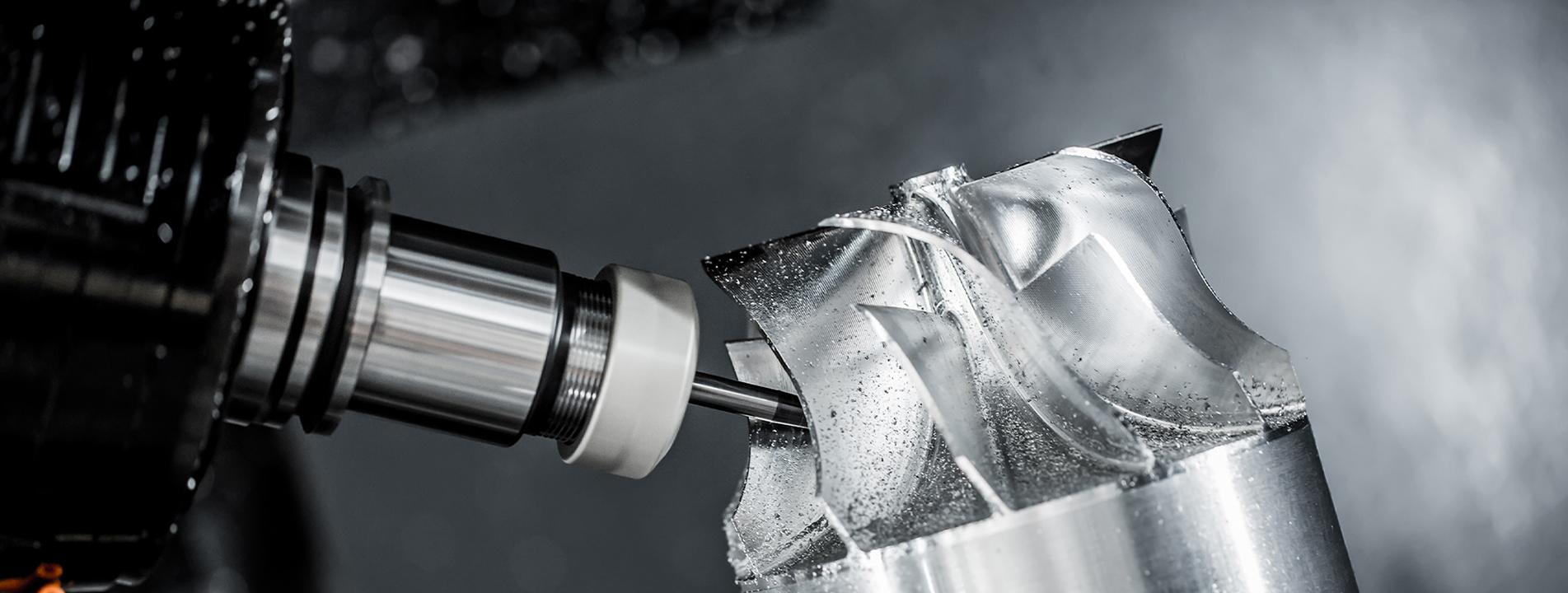
In precision mold manufacturing,powder metallurgy high-speed steel (PM HSS) and tungsten carbide (WC) are critical high-performance materials. Their high hardness, excellent wear resistance and stable microstructure make them ideal for new energy, medical, 5G and long-life stamping mold components.
Yet their high hardness and dense structure create tough machining challenges. Traditional processing leads to severe tool wear, thermal deformation and dimensional errors, failing micron-level precision requirements. Thus, high-efficiency, low-deformation machining processes for PM HSS and WC have become key industry competitiveness.
Material Advantages & Machining Pain Points
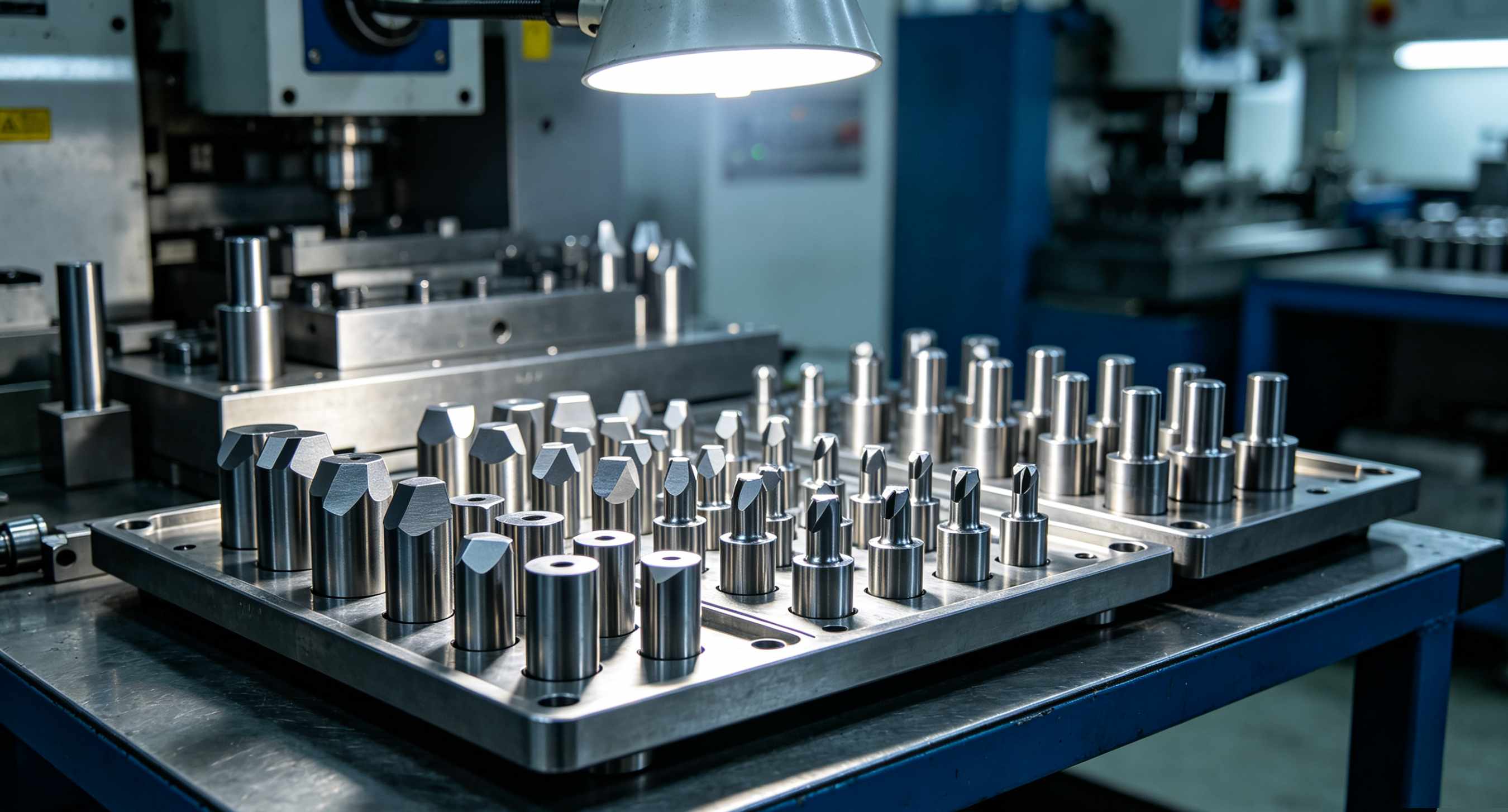
Powder Metallurgy High-Speed Steel (PM HSS)
PM HSS adopts powder metallurgy sintering, free of carbide segregation and internal defects. Its uniform structure and balanced mechanical properties reduce heat-treatment deformation by 30%–50% vs conventional HSS, perfect for ultra-precision inserts, durable pins and complex mold components.
Key Pain Points: High alloy content increases cutting resistance; improper parameters induce residual stress and size deviation; mismatched tools greatly reduce machining efficiency.
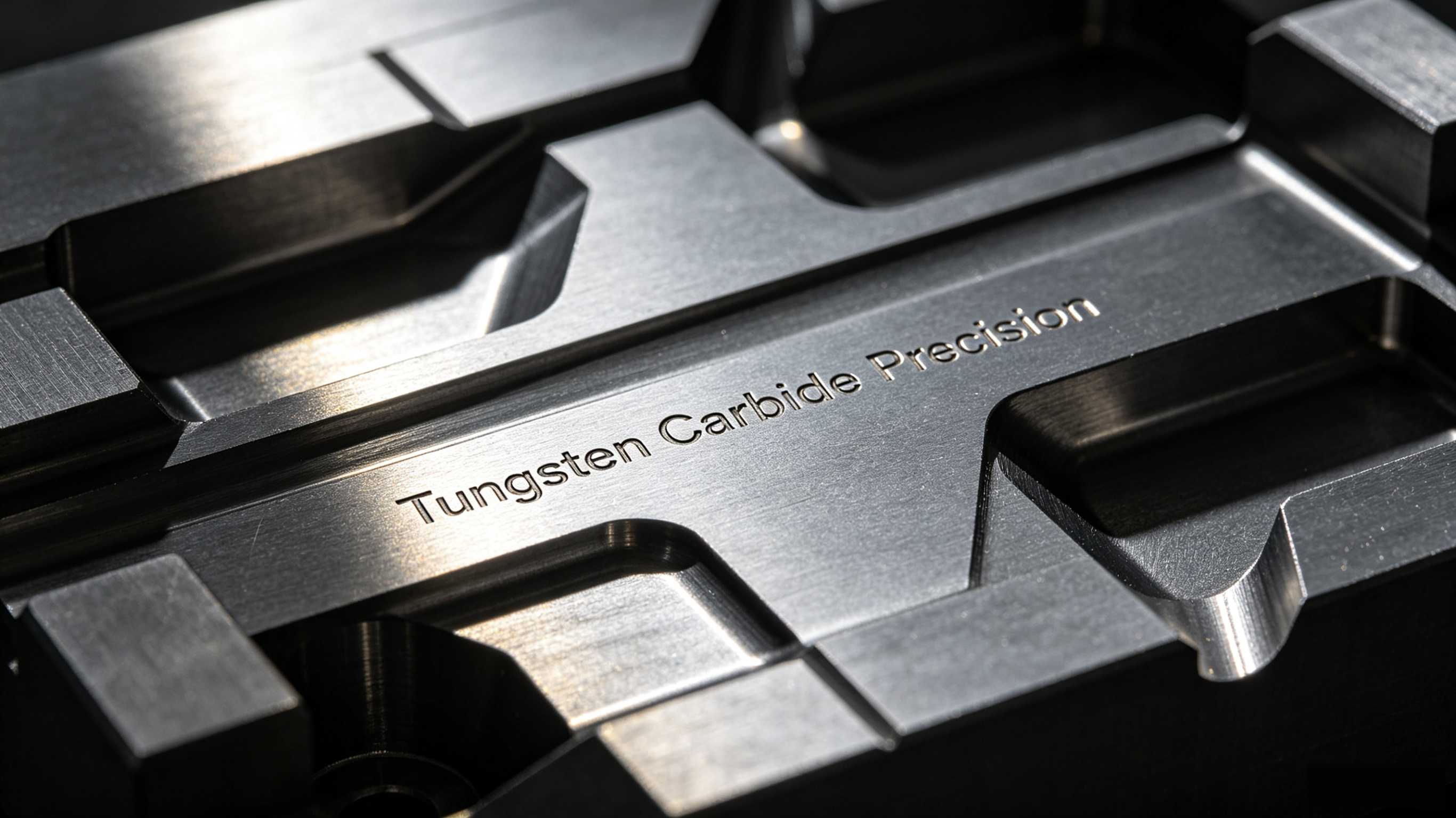
Tungsten Carbide (WC)
Tungsten carbide features exceptional hardness, strength and wear resistance. It is widely used in micro-precision mold cores and fine stamping parts, maintaining stable precision under high-frequency friction and impact.
Key Pain Points: High brittleness easily causes chipping and micro-cracks; concentrated cutting heat triggers thermal deformation, while traditional machining is inefficient with poor surface finish requiring extra polishing.
Core Low-Deformation & High-Efficiency Machining Processes
Constant-Temperature Precision Machining System
Thermal deformation is the main cause of dimensional failure for hard-material parts. Leading manufacturers apply 20±1℃ constant-temperature workshops and machine tool thermal calibration to eliminate temperature interference.
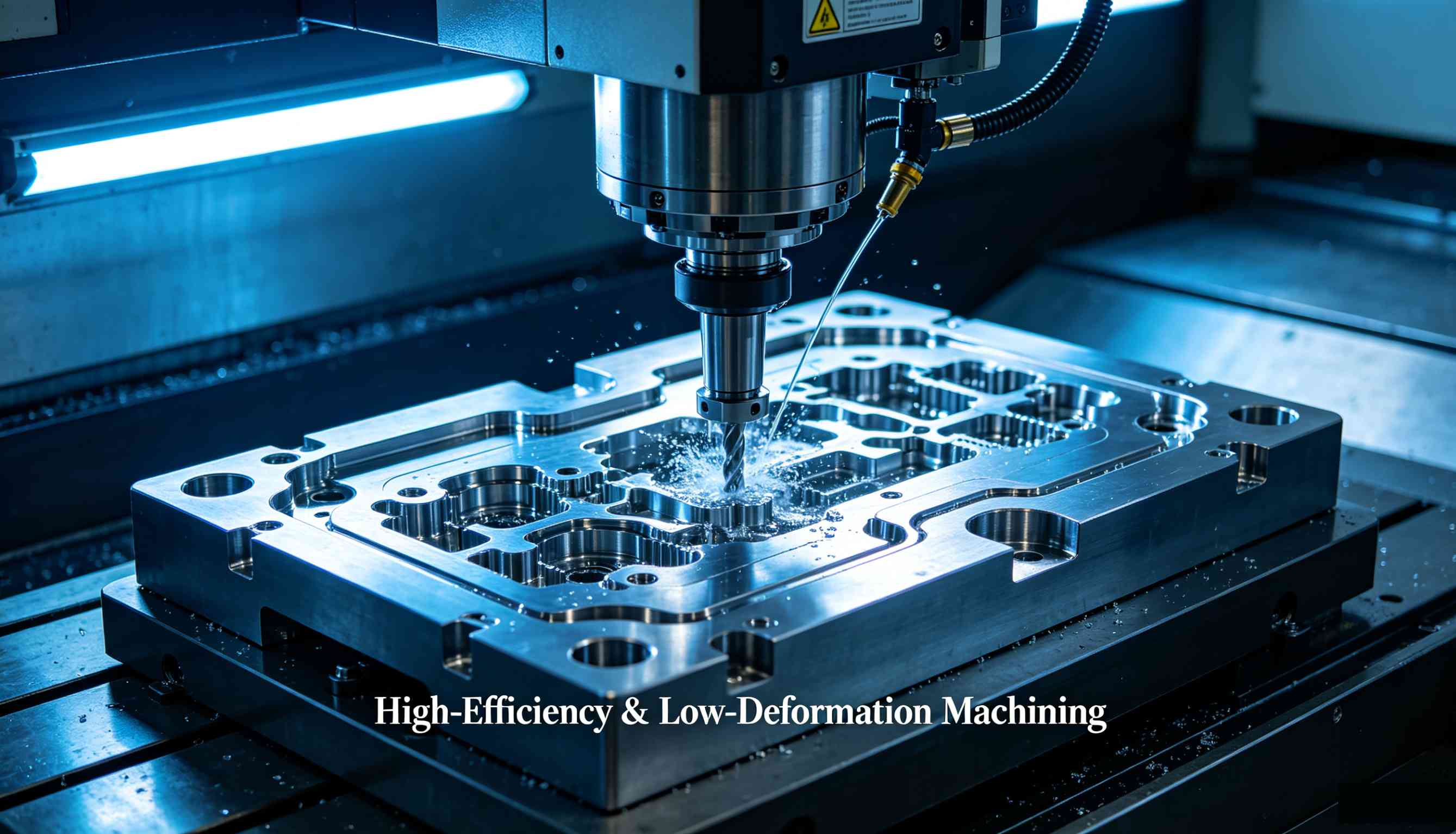
Combined with MQL minimum quantity lubrication and low-temperature cooling, this system cuts heat accumulation and thermal stress, controlling workpiece deformation within ±0.002mm for reliable micron-level precision.
Optimized Tool Matching & Cutting Parameters
Professional tool matching ensures balanced precision and efficiency. PM HSS finishing uses heat-resistant ultra-fine carbide cutters with high-speed low-feed strategies to lower cutting resistance and residual stress. Tungsten carbide adopts diamond grinding and specialized EDM to solve poor machinability and fast tool wear.
We have standardized parameters for ASP60, KG7 and other mainstream grades. Layered cutting disperses stress to prevent deformation, boosting machining efficiency by 30%–50%.
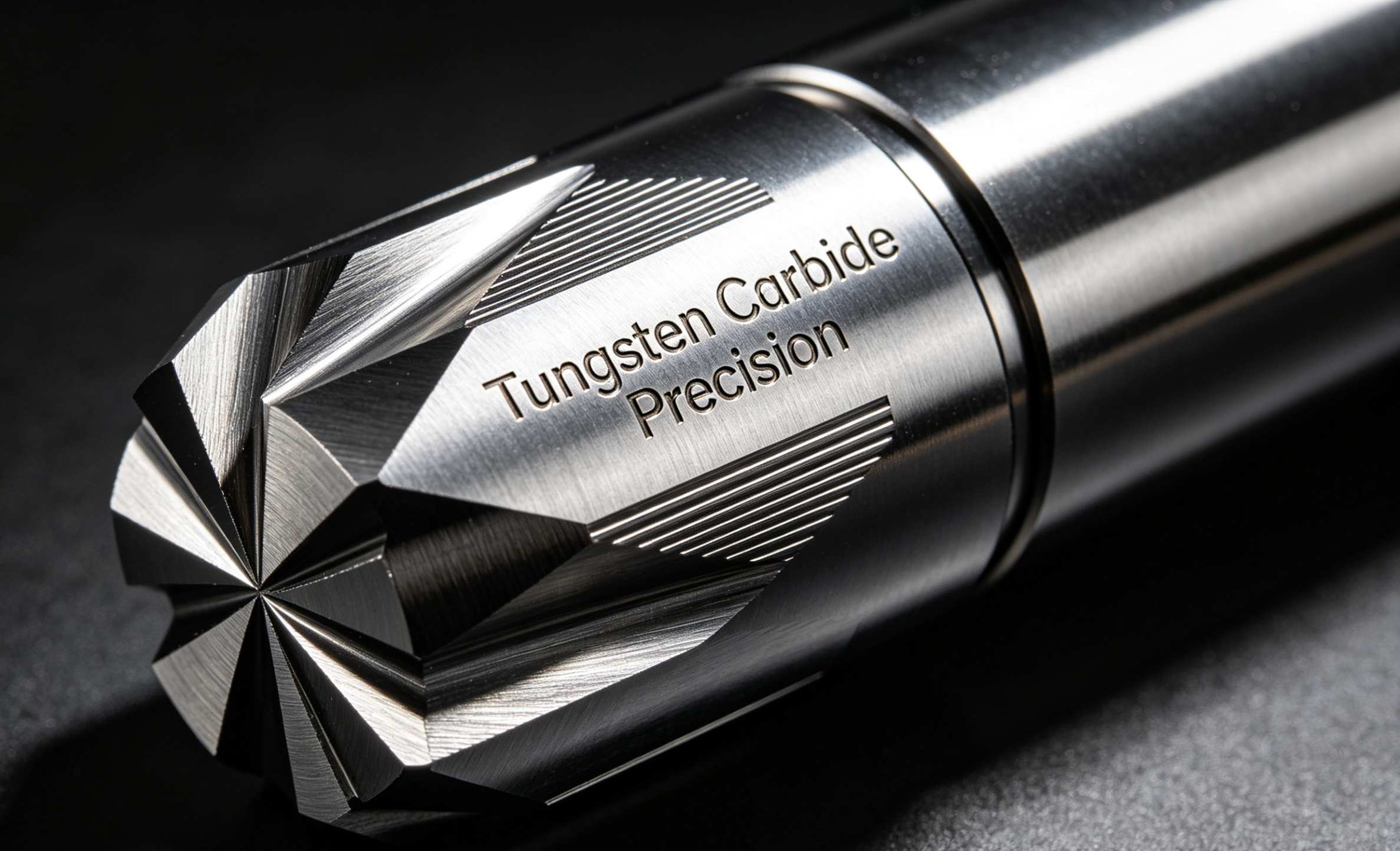
One-Clamp Five-Axis Composite Machining
Traditional 3-axis repeated clamping causes positioning errors and stress deformation. The five-axis one-clamp machining process completes complex curved, special-shaped and multi-angle structures in a single setup.
This method eliminates secondary clamping deformation, improves batch consistency, and shortens hard-part cycle time by over 40%, becoming the preferred high-end mold processing solution.
Stress Relief & Precision Post-Processing
Residual stress leads to long-term dimensional instability. We perform secondary stress relief after roughing to avoid post-production deformation. Tungsten carbide parts receive precision grinding and ultra-mirror finishing to remove micro-defects, optimize surface quality and extend mold life.
Practical Application Value & Industry Benefits
Our optimized process resolves hard-material machining defects including low precision, deformation and low efficiency, delivering three core advantages for high-end new energy and medical mold manufacturing:
Ultra-high precision stability: Micron-level tolerance control and 100% pass rate satisfy global clients’ zero-defect standards.
Cost & efficiency improvement: Standardized processing reduces tool loss, rework and lead time, cutting overall production costs.
Extended mold service life: Low-stress machining avoids internal flaws. Combined with PVD/CVD coating, molds achieve greatly enhanced wear and fatigue resistance with doubled lifespan.
As manufacturing precision standards rise, high stability and durability have become essential for mold parts. PM HSS and tungsten carbide will continue dominating high-end precision manufacturing.
Optimized low-deformation processes, standardized parameters and smart equipment help manufacturers break hard-material bottlenecks and gain high-end market competitiveness.
Looking for reliable PM HSS & tungsten carbide precision machining? We offer one-stop DFM optimization, precision machining, stress relief and surface treatment for custom high-quality mold parts worldwide.


© 2026 © HONGYU MOULD LIMITED. All Rights Reserved.
 IPv6 network supported