banner
  • How Overseas Clients Can Reliably Choose Precision Stamping Mold Parts Suppliers
    How Overseas Clients Can Reliably Choose Precision Stamping Mold Parts Suppliers May 14, 2026
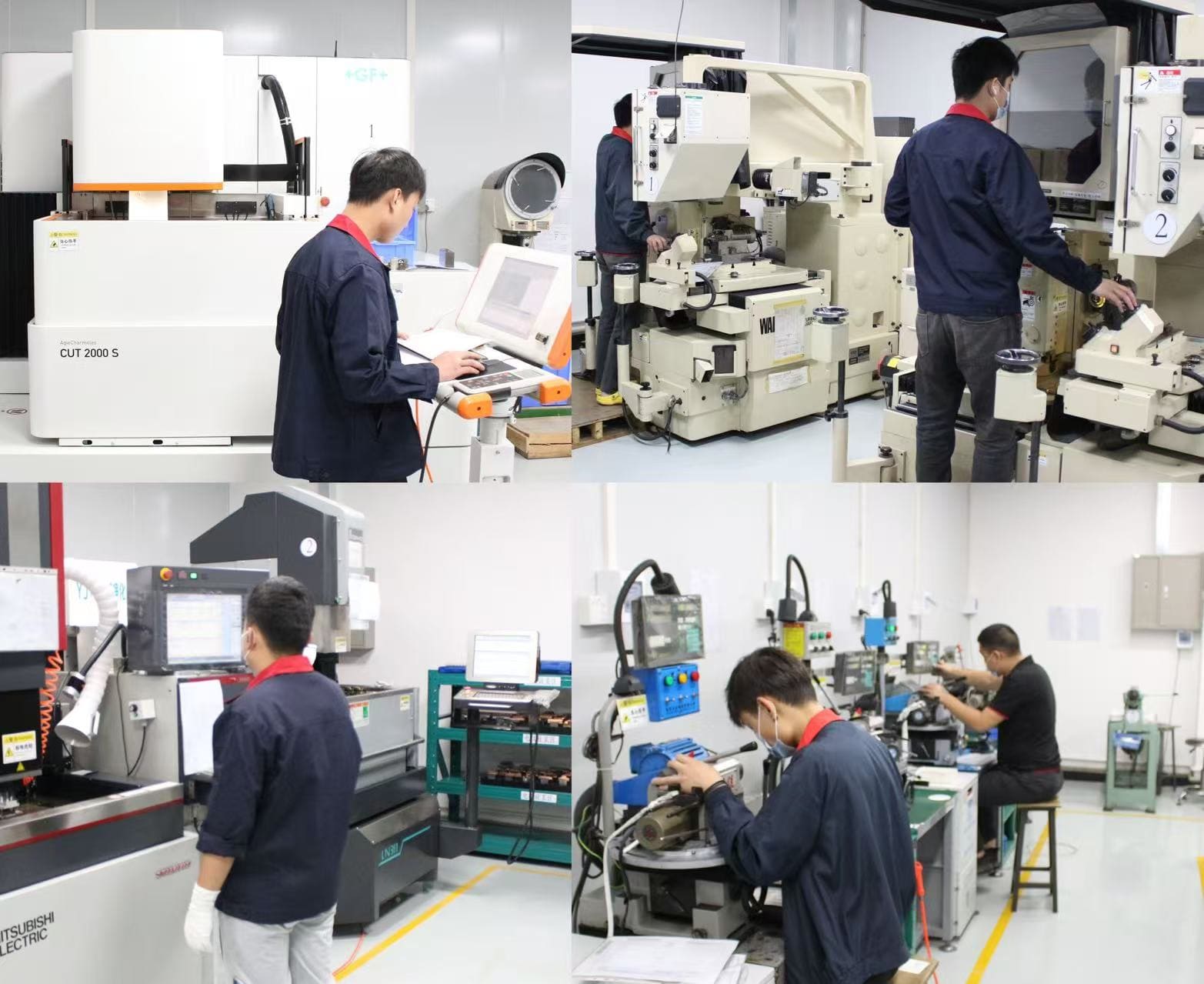
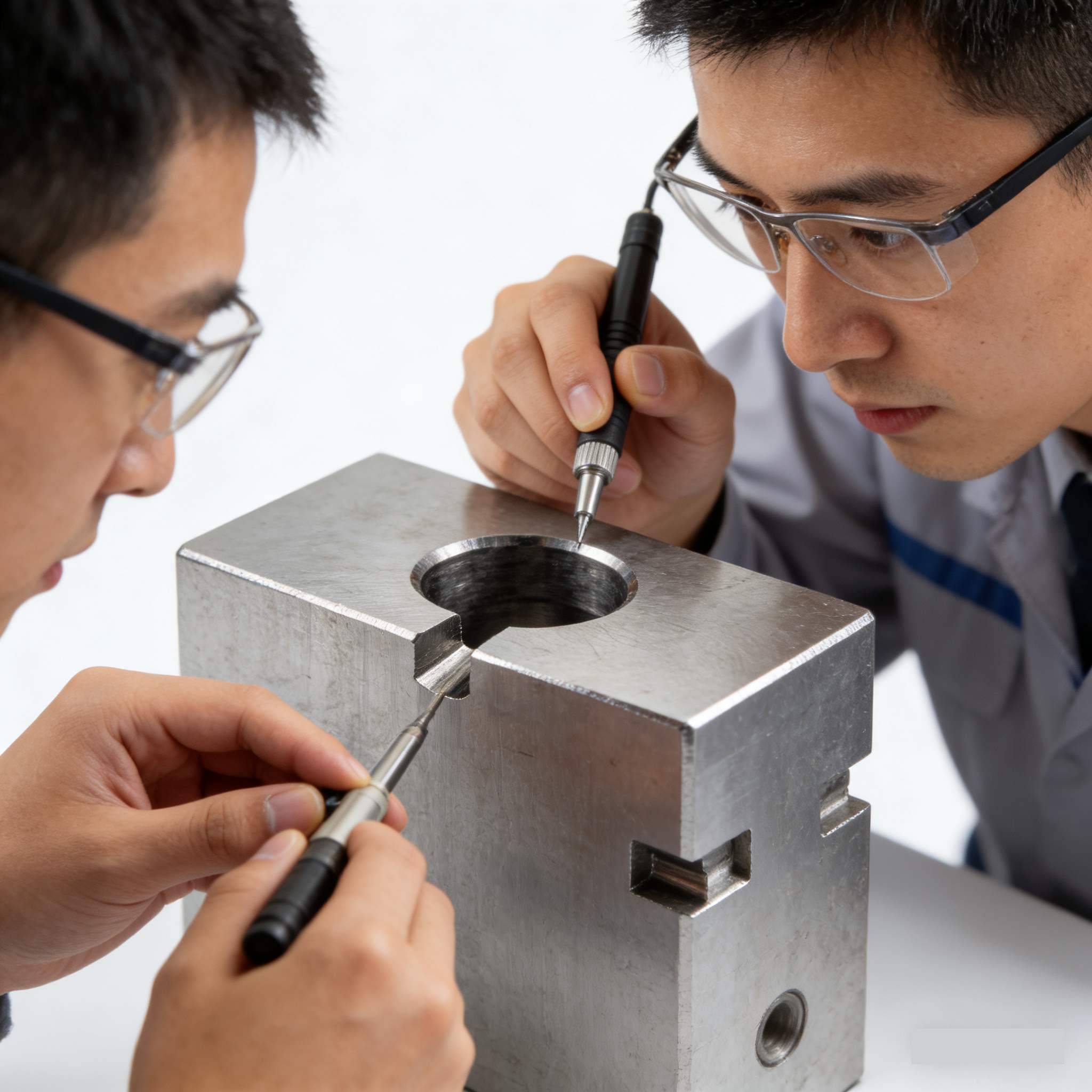
    Precision stamping mold parts—punches, dies, guide pillars, guide bushes, ejector pins—are core to stamping molds, supporting automotive, new energy, consumer electronics and humanoid robots. For overseas clients, choosing a reliable supplier is a strategic investment impacting mold performance, service life, efficiency, and supply chain stability. With numerous options, especially from China, we outline below the key criteria to consider when making an informed decision. Define Your Exact Mold Parts Requirements Clarify your mold parts needs first to avoid miscommunication and delays. Ask these questions: • Precision & Tolerance: Do you need micro-precision for high-end parts (e.g., robot mold punches) or standard precision? Document tolerances, surface roughness, and formability.   • Materials: What materials do your mold parts need? Options include high-hardness mold steel (ASP23,SKH51, or domestic SKD11/1.2344 alternatives) or wear-resistant tungsten carbide. Ensure the supplier handles your mold’s working conditions.   • Scale & Lead Time: What’s your annual usage and order volume? High-volume or small-batch custom parts? Clarify lead times for custom components.   • Value-Added Services: Need heat treatment, surface coating, grinding, or deburring? A one-stop supplier simplifies procurement.   The Foundation of Reliable Mold Parts A supplier’s technical capabilities determine mold parts quality and durability. Verify these: a. Equipment & In-House Processing Choose suppliers with advanced mold processing equipment (high-precision CNC, wire-cutting, EDM, grinding) and in-house capabilities for tighter tolerances and faster lead times. Request facility photos and equipment updates. b. Engineering & DFM Expertise A reliable supplier offers DFM expertise for mold parts to optimize designs, reduce scrap, and extend service life. Prototyping and simulation refine designs before mass production, saving time and money.   For complex parts (e.g., EV battery shell mold dies), ask about experience solving wear or fit issues. c. Quality Control & Certifications Prioritize ISO 9001/IATF 16949 certified suppliers for consistent quality and traceability. Inquire about inspection processes (AI visual, CMM) and ability to provide reports and material certificates. Evaluate Industry Experience & Reputation Industry-specific mold parts experience is critical. For example, new energy automotive expertise means understanding motor core die inserts and battery shell mold punches.   • Case Studies & References: Ask for industry-related case studies and overseas client references to verify reliability.   • Reputation: Research global standing via forums; avoid suppliers with quality complaints or delays. Assess Supply Chain & Logistics For overseas clients, supply chain stability and logistics are key. A reliable supplier has a robust chain to avoid delivery delays.   • Material Sourcing: Inquire about material suppliers and backups.   • Logistics & Compliance: Ensure international shipping experience for mold parts, handling customs and regulations. Ask about shipping partners and delay management.   • Scalability: Choose a supplier that scales production to meet growing demand without sacrificing quality.   Prioritize Communication & After-Sales Support Effective communication is vital—look for a dedicated English-speaking international team to overcome language/time zone barriers.   After-sales support matters: ensure timely technical help, spare parts, and maintenance advice. Ask about warranty for non-conforming parts. Compare Cost Wisely: Focus on TCO Cheap mold parts may raise long-term costs (replacement, downtime). Focus on Total Cost of Ownership (TCO): • Initial purchase price • Quality costs (defects, rework, downtime) • Lead time and logistics costs • Maintenance and replacement costs A slightly higher upfront price often lowers TCO via better quality and longer service life. Choose a Partner for Precision Mold Parts Selecting a reliable supplier impacts mold performance. Define needs, verify capabilities, evaluate experience, and focus on TCO to find an aligned partner.   The best supplier acts as your team extension—offering expertise, quality, and support. Research thoroughly for a long-term partnership. Your Trusted Partner: Hongyu Precision Stamping Mold Parts Dongguan Hongyu Mould Co., Ltd. has been rooted in the field of precision mold parts manufacturing since 2007, focusing on high-end markets such as Germany and Japan for more than 19 years. The company mainly engages in high-precision mold accessories, including stamping mold parts, tungsten carbideparts, ceramic parts, etc., whose products are widely used in key fields such as automotive, IC semiconductor, electronics, aviation, home furnishing, and mineral resources.   The company is equipped with advanced production and testing equipment, and has established a strict quality control system, which comprehensively controls the whole process from raw materials, precision processing to finished product testing to ensure the precision and stable quality of products. The team has both industry technical accumulation and rich foreign trade service experience, deeply understands international market demand and industry standards, and can provide one-stop supporting services according to customers' customized needs, efficiently responding to delivery and after-sales demands.   Upholding the business philosophy of professionalism, integrity and win-win, the company continues to deepen technological innovation and service optimization. Its products are exported to many countries and regions around the world, and it has established long-term and stable cooperative relations with many industry customers. In the future, it will continue to take technology as the foundation and customers as the center, and strive to become a reliable partner in the global hardware mold parts processing field, providing solid component support for the development of the industrial manufacturing field.  
  • Precision Stamping Mold Parts Tolerance Standards: Industry-General Dimensional Datums
    Precision Stamping Mold Parts Tolerance Standards: Industry-General Dimensional Datums Apr 29, 2026
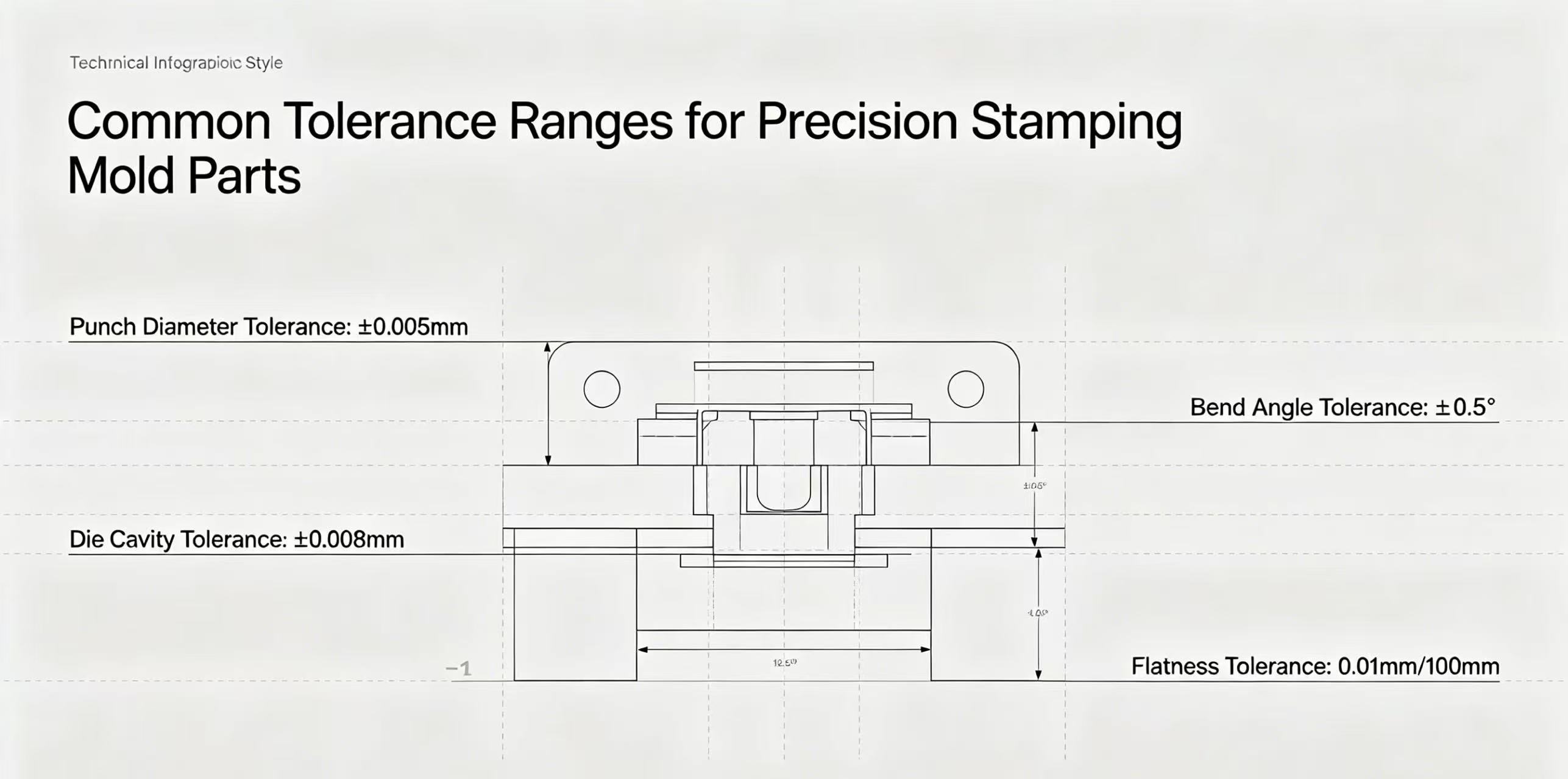
    In precision manufacturing, even minor deviations can cause costly failures or poor assembly. Tolerance standards and dimensional datums are critical for reliable precision stamping mold performance, enabling consistent, high-quality components for automotive, aerospace, electronics.   What Are Tolerance Standards for Precision Stamping Mold Parts? Tolerance standards define allowable variations in mold part size, shape, and position, ensuring seamless functionality and interchangeability. Unlike general stamping, precision stamping requires tight tolerances—typically ±0.001 to ±0.005 inches (±0.025 to ±0.127 mm)—rooted in industry consensus, material behavior, and end-product needs.   These standards balance two key goals: ensuring part interchangeability (for easy batch/manufacturer swaps) and balancing precision with manufacturability, avoiding overly tight tolerances that inflate costs unnecessarily.   Industry-General Dimensional Datums: The Foundation of Tolerance Control Dimensional datums are reference points/lines/planes that standardize tolerance measurements. Without clear datums, precise tolerances become meaningless, leading to misalignment and non-conforming parts. The industry uses a “datum reference frame (DRF)” with three primary datums:   1. Primary Datum (Datum A) The most critical reference (often a flat surface like the mold’s parting surface or base plate bottom), ensuring alignment with the stamping press. It constrains three degrees of freedom (X/Y/Z translation) and sets the baseline for all measurements.   2. Secondary Datum (Datum B) Perpendicular to the primary datum, constraining two more degrees of freedom (X/Y rotation). Typically a side surface, slot, or pin (e.g., a punch shank’s side) to reinforce orientation relative to Datum A.   3. Tertiary Datum (Datum C) Perpendicular to both primary and secondary datums, constraining the final degree of freedom (Z rotation). A small feature (e.g., hole, notch) that fine-tunes position, ensuring full part constraint. Key Industry Standards Governing Tolerances and Datums Global standards provide a common language for manufacturers, ensuring supply chain consistency and clear design communication:   1. ASME Y14.5 (GD&T) The gold standard for geometric dimensioning and tolerancing (GD&T), establishing symbols and rules for part features. Updated in 2018 (reaffirmed 2024), it emphasizes datums for controlling geometric tolerances and is widely used in automotive, aerospace, and electronics.   2. ISO 2768 (General Tolerances) Defines general tolerances for unmarked linear/angular/geometric features, with four classes (F/M/C/V). Most precision mold parts use fine/medium classes, simplifying drawings by reducing redundant tolerance marking. 3. DIN 6930 (Stamped Steel Parts) Tailored for stamped steel, accounting for sheared metal behaviors (e.g., die roll) that affect tolerances. It specifies four accuracy levels for dimensions, concentricity, and symmetry, popular in European automotive/industrial sectors.   4. ISO 8062-3 (Moulded Parts) Focuses on dimensional/geometrical tolerances for moulded parts (including precision stamping molds), defining grades and machining allowances for global consistency.   Common Tolerance Ranges for Precision Stamping Mold Parts Typical ranges balance precision and cost, varying by part function, material, and process: Punches and Dies: Critical surfaces (punch tips, die cavities): ±0.001–±0.005 inches (±0.025–±0.127 mm); non-critical: ±0.005–±0.010 inches (±0.127–±0.254 mm). Guide Pins and Bushings: Diameter/concentricity: ±0.0005–±0.001 inches (±0.0127–±0.0254 mm); clearance: 0.0005–0.001 inches to avoid binding. Mold Bases: Mounting/datum surfaces: ±0.001–±0.002 inches (±0.0254–±0.0508 mm) for press alignment. Blanking/Piercing: Blanking: ±0.05 mm; piercing: ±0.05 mm (diameter/position); precision stamping reduces to ±0.025 mm. Factors Influencing Tolerance Selection Tolerance selection requires balancing four key factors:  End-Product Function: Critical/safety-critical parts (medical/aerospace) need tighter tolerances (often ±0.001 inches) than non-critical components.  Material Properties: Softer materials (aluminum, copper) hold tolerances better than hard materials (high-strength steel), which may require die compensation for springback.  Manufacturing Process: Progressive dies and servo presses enable tighter tolerances; tight-clearance dies (5–10% of material thickness) improve control. Cost: Tolerances tighter than ±0.001 inches require specialized tooling and temperature control, driving up costs exponentially.   In summary, understanding industry-general dimensional datums and tolerance standards is essential for optimizing precision stamping mold performance, reducing waste, and ensuring end-product quality. By adhering to established standards like ASME Y14.5 and ISO 2768, and carefully balancing functional needs with manufacturability, manufacturers can create reliable, cost-effective mold parts that meet the demands of today’s precision-driven industries. As technology advances, these standards will continue to evolve, but their core purpose—providing a consistent, reliable framework for tolerance control—will remain the cornerstone of precision stamping manufacturing.    
  • How to Reduce the Impact of Mold Components on Flash Formation in Stamped Products
    How to Reduce the Impact of Mold Components on Flash Formation in Stamped Products Jan 07, 2026
    Flash is a common yet costly defect in stamping manufacturing, directly undermining product precision, aesthetic quality, and production efficiency. While factors like stamping pressure and speed play roles, mold component quality, fit, and maintenance are the core determinants of flash occurrence. For manufacturers focusing on precision stamping mold parts, targeted optimization of these components is the most direct and effective way to minimize flash-related issues.          Here are actionable strategies to reduce the impact of mold components on flash:   1. Prioritize High-Precision Components with Tight Tolerances   The foundation of flash-free stamping lies in the dimensional accuracy of core mold components. For punch and die inserts, even a 0.001mm deviation can create micro-gaps where material seeps out during stamping. Opt for inserts made from high-hardness materials like SKD11 or tungsten carbide, which resist deformation under high stamping forces and maintain tight mating tolerances over long production runs. For guide pillars and bushings, choose chrome-plated or nitride-coated options with precision-ground surfaces to ensure perfect mold alignment—misalignment is a top cause of uneven flash along the parting line. Ensure that ejector pins and sleeves have optimized clearance (0.002–0.005mm for precision applications) to eliminate leakage paths for molten or malleable material during the stamping cycle.        2. Establish a Regular Maintenance and Replacement Schedule   Wear and tear are inevitable for mold components subjected to repeated stamping impacts, but neglecting maintenance accelerates flash formation. Develop a preventive maintenance plan tailored to production volume: clean guide pillars and bushings daily to remove metal debris and re-lubricate them to reduce friction and wear; inspect punch and die edges weekly for chipping or blunting, and sharpen or replace them immediately if damage is found; replace ejector pins and springs every 50,000–100,000 cycles, depending on the material being stamped. For parting line locks and stops, calibrate clamping force monthly to ensure uniform pressure distribution, which eliminates localized gaps that lead to flash.        3. Optimize Component Assembly and Alignment   Precise assembly is just as important as component quality in preventing flash. During mold assembly, use precision alignment tools to ensure that the punch and die are perfectly centered, and that guide pillars are perpendicular to the mold base. Even a slight angular deviation can create uneven gaps along the parting line, resulting in persistent flash. For large stamping molds, use laser alignment systems to verify the parallelism of mold halves before locking them in place. Additionally, ensure that all fasteners are tightened to the recommended torque to prevent component shifting during high-pressure stamping operations.     4. Customize Component Design for Specific Stamping Materials   Different stamping materials—from thin-gauge steel to aluminum alloys—have varying levels of ductility and flow characteristics, which impact flash formation. Work with your engineering team to customize mold components for the materials you process: for soft, ductile materials, use punch and die inserts with tighter clearances and polished surfaces to minimize material adhesion; for hard, high-strength metals, opt for wear-resistant components with reinforced edges to prevent deformation. This tailored approach ensures that mold components work in harmony with the stamping material, reducing the risk of flash without compromising production speed.                        Reducing the impact of mold components on flash formation is not a one-time fix—it requires a holistic approach of precision component selection, rigorous inspection, proactive maintenance, and customized design. By focusing on these strategies, manufacturers can significantly cut down on flash-related rework and waste, improve product quality, and enhance overall production efficiency. In the competitive world of precision stamping, every component detail counts—and mastering these details is the key to achieving consistent, flash-free results.       Hongyu Mould stands out as a trusted partner in solving flash-related challenges with distinct advantages tailored to precision mold manufacturing. First, we boast advanced precision machining capabilities, producing core and cavity inserts, guide pillars, and ejector components with ultra-tight tolerances, ensuring seamless mating surfaces that eliminate micro-gaps at the source.Second, we prioritize high-performance materials, utilizing tungsten carbide, heat-treated tool steel, and chrome-plated alloys that resist deformation and wear even under extreme molding pressures and temperatures, maintaining component integrity over thousands of production cycles.Third, our professional engineering team offers customized solutions—from optimized ejector clearance design to parting line clamping force calibration—addressing the unique flash pain points of each client’s mold system. Finally, we provide end-to-end technical support, including post-delivery component inspection and maintenance guidance, to ensure long-term production for our partners.Choosing Hongyu Mould means investing in reliable, high-precision mold components that elevate product quality and streamline manufacturing efficiency.  

Need Help? Chat with us

leave a message
For any request of information or technical support, fill in the form. All fields marked with an asterisk* are required.
Submit
Looking for FAQs?
Contact us #
+86 769 832011519

Our hours

Mon 11/21 - Wed 11/23: 9 AM - 8 PM
Thu 11/24: closed - Happy Thanksgiving!
Fri 11/25: 8 AM - 10 PM
Sat 11/26 - Sun 11/27: 10 AM - 9 PM
(all hours are Eastern Time)

home

products

whatsApp

Contacts