banner
  • Precision Stamping Mold Parts Tolerance Standards: Industry-General Dimensional Datums
    Precision Stamping Mold Parts Tolerance Standards: Industry-General Dimensional Datums Apr 29, 2026
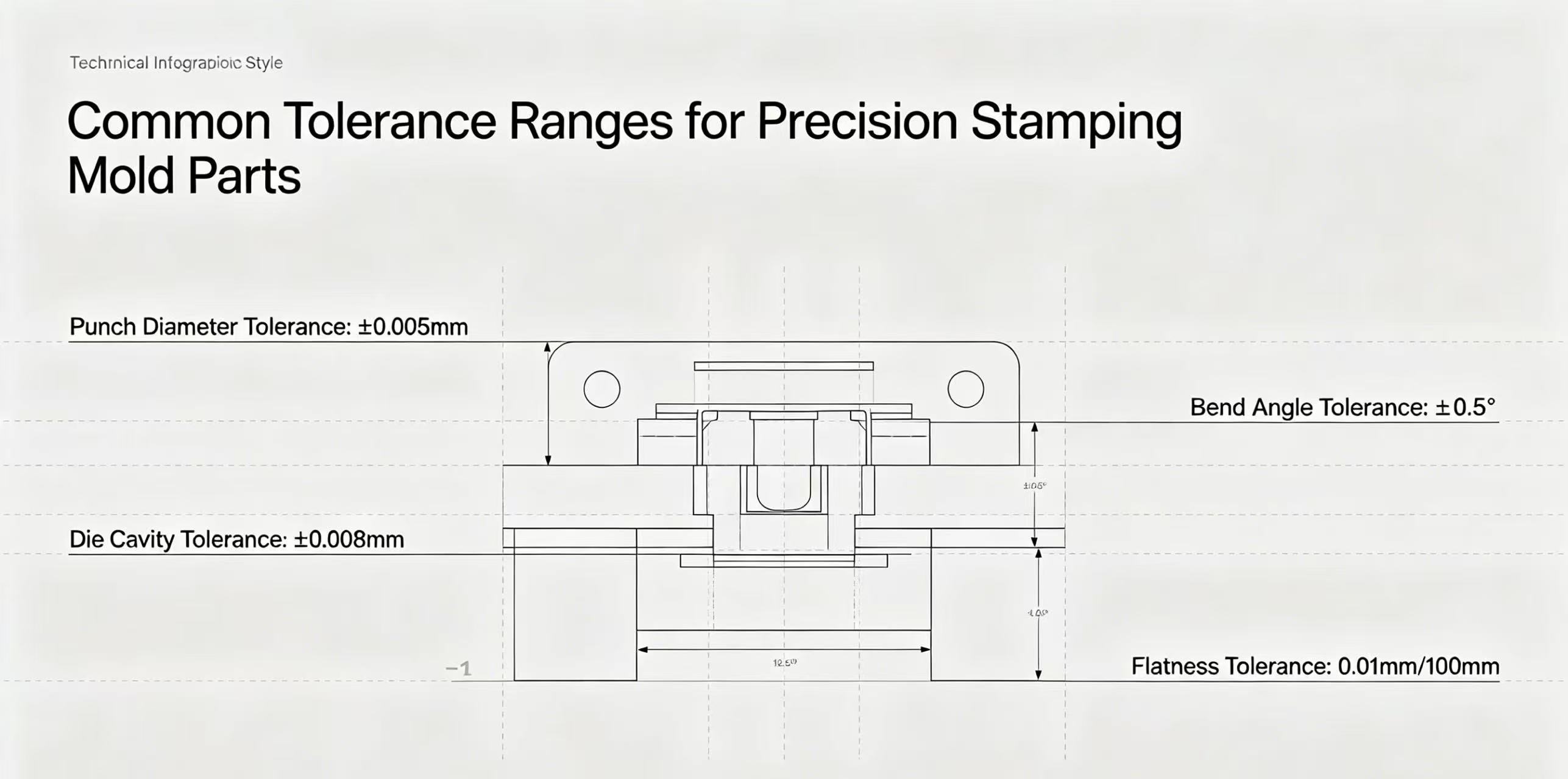
    In precision manufacturing, even minor deviations can cause costly failures or poor assembly. Tolerance standards and dimensional datums are critical for reliable precision stamping mold performance, enabling consistent, high-quality components for automotive, aerospace, electronics.   What Are Tolerance Standards for Precision Stamping Mold Parts? Tolerance standards define allowable variations in mold part size, shape, and position, ensuring seamless functionality and interchangeability. Unlike general stamping, precision stamping requires tight tolerances—typically ±0.001 to ±0.005 inches (±0.025 to ±0.127 mm)—rooted in industry consensus, material behavior, and end-product needs.   These standards balance two key goals: ensuring part interchangeability (for easy batch/manufacturer swaps) and balancing precision with manufacturability, avoiding overly tight tolerances that inflate costs unnecessarily.   Industry-General Dimensional Datums: The Foundation of Tolerance Control Dimensional datums are reference points/lines/planes that standardize tolerance measurements. Without clear datums, precise tolerances become meaningless, leading to misalignment and non-conforming parts. The industry uses a “datum reference frame (DRF)” with three primary datums:   1. Primary Datum (Datum A) The most critical reference (often a flat surface like the mold’s parting surface or base plate bottom), ensuring alignment with the stamping press. It constrains three degrees of freedom (X/Y/Z translation) and sets the baseline for all measurements.   2. Secondary Datum (Datum B) Perpendicular to the primary datum, constraining two more degrees of freedom (X/Y rotation). Typically a side surface, slot, or pin (e.g., a punch shank’s side) to reinforce orientation relative to Datum A.   3. Tertiary Datum (Datum C) Perpendicular to both primary and secondary datums, constraining the final degree of freedom (Z rotation). A small feature (e.g., hole, notch) that fine-tunes position, ensuring full part constraint. Key Industry Standards Governing Tolerances and Datums Global standards provide a common language for manufacturers, ensuring supply chain consistency and clear design communication:   1. ASME Y14.5 (GD&T) The gold standard for geometric dimensioning and tolerancing (GD&T), establishing symbols and rules for part features. Updated in 2018 (reaffirmed 2024), it emphasizes datums for controlling geometric tolerances and is widely used in automotive, aerospace, and electronics.   2. ISO 2768 (General Tolerances) Defines general tolerances for unmarked linear/angular/geometric features, with four classes (F/M/C/V). Most precision mold parts use fine/medium classes, simplifying drawings by reducing redundant tolerance marking. 3. DIN 6930 (Stamped Steel Parts) Tailored for stamped steel, accounting for sheared metal behaviors (e.g., die roll) that affect tolerances. It specifies four accuracy levels for dimensions, concentricity, and symmetry, popular in European automotive/industrial sectors.   4. ISO 8062-3 (Moulded Parts) Focuses on dimensional/geometrical tolerances for moulded parts (including precision stamping molds), defining grades and machining allowances for global consistency.   Common Tolerance Ranges for Precision Stamping Mold Parts Typical ranges balance precision and cost, varying by part function, material, and process: Punches and Dies: Critical surfaces (punch tips, die cavities): ±0.001–±0.005 inches (±0.025–±0.127 mm); non-critical: ±0.005–±0.010 inches (±0.127–±0.254 mm). Guide Pins and Bushings: Diameter/concentricity: ±0.0005–±0.001 inches (±0.0127–±0.0254 mm); clearance: 0.0005–0.001 inches to avoid binding. Mold Bases: Mounting/datum surfaces: ±0.001–±0.002 inches (±0.0254–±0.0508 mm) for press alignment. Blanking/Piercing: Blanking: ±0.05 mm; piercing: ±0.05 mm (diameter/position); precision stamping reduces to ±0.025 mm. Factors Influencing Tolerance Selection Tolerance selection requires balancing four key factors:  End-Product Function: Critical/safety-critical parts (medical/aerospace) need tighter tolerances (often ±0.001 inches) than non-critical components.  Material Properties: Softer materials (aluminum, copper) hold tolerances better than hard materials (high-strength steel), which may require die compensation for springback.  Manufacturing Process: Progressive dies and servo presses enable tighter tolerances; tight-clearance dies (5–10% of material thickness) improve control. Cost: Tolerances tighter than ±0.001 inches require specialized tooling and temperature control, driving up costs exponentially.   In summary, understanding industry-general dimensional datums and tolerance standards is essential for optimizing precision stamping mold performance, reducing waste, and ensuring end-product quality. By adhering to established standards like ASME Y14.5 and ISO 2768, and carefully balancing functional needs with manufacturability, manufacturers can create reliable, cost-effective mold parts that meet the demands of today’s precision-driven industries. As technology advances, these standards will continue to evolve, but their core purpose—providing a consistent, reliable framework for tolerance control—will remain the cornerstone of precision stamping manufacturing.    
  • Processing Key Points of Small-Sized and Precision Parts for Electronic Stamping Molds
    Processing Key Points of Small-Sized and Precision Parts for Electronic Stamping Molds Apr 03, 2026
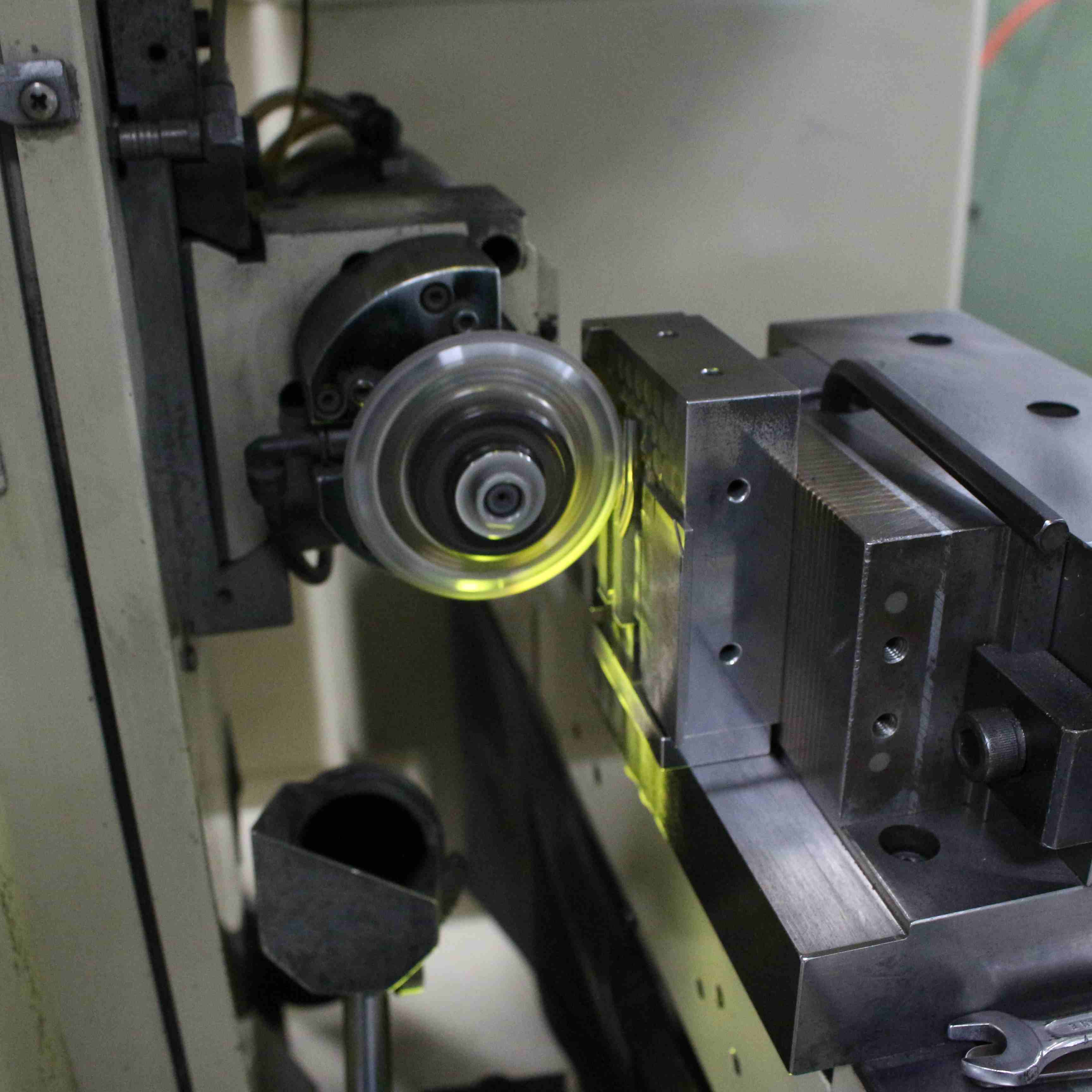
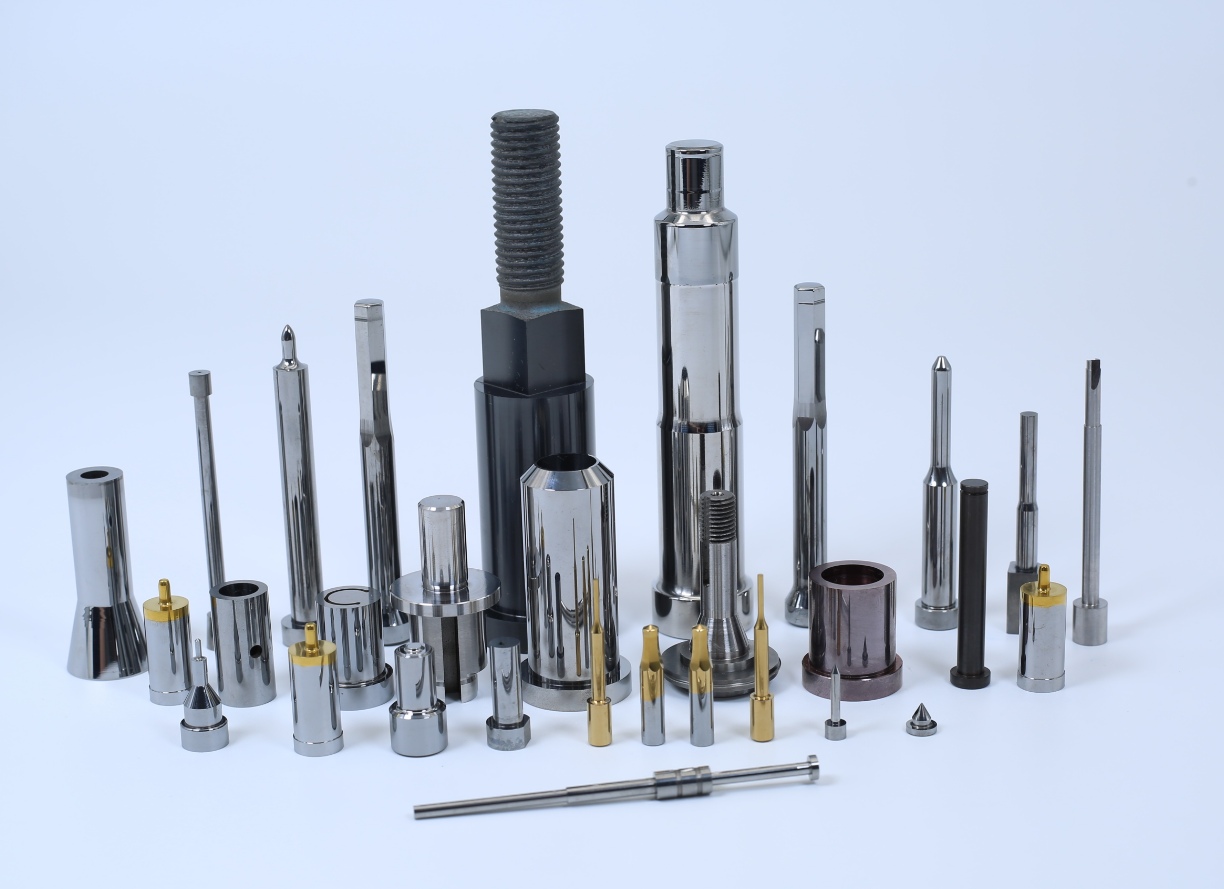
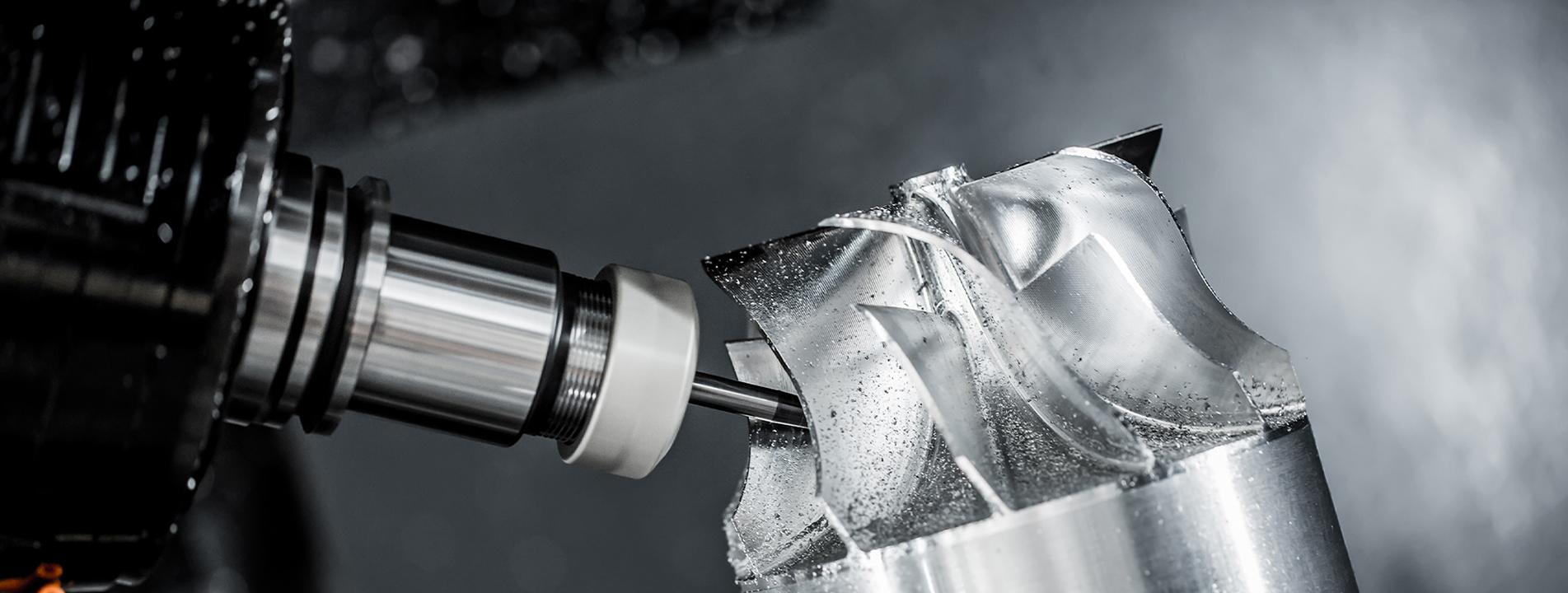
    In the fast-evolving global electronics industry, the demand for miniaturization, high precision, and reliability of electronic products (e.g., smart wearables, automotive electronics) is rising. This drives the upgrading of electronic stamping mold technology, especially small-sized and precision mold parts—core components determining stamping product quality and service life. These small parts (≤5mm, tolerance ±0.01mm) rely on strict process control and advanced technologies to achieve ultra-high precision. Material Selection: The Foundation of Precision and Durability The material of small precision stamping mold parts directly affects their processability, wear resistance, and service life. Unlike traditional stamping molds, electronic mold parts endure high-frequency stamping (thousands of times per hour) and must maintain dimensional stability. Thus, material selection follows the principle of "high precision, hardness, processability, and stability." Common materials and their applications:   High-speed steel (HSS): Widely used for small punches, dies, and guides, offering good wear resistance, machinability, and heat treatment performance. It reaches HRC 62-65 after heat treatment, meeting general electronic mold requirements.   Cemented carbide: Preferred for ultra-precise parts (e.g., micro punches), with hardness up to HRC 85-90 for superior wear resistance. Note its brittleness—handle carefully to avoid cracking. Stainless steel/special alloys: Ideal for harsh environments (high temperature, corrosion). SUS304, SUS316L, and alloys like titanium ensure reliability in complex conditions (e.g., automotive engines).   Key point: Inspect material uniformity, purity, and surface quality upfront. Internal defects (inclusions, cracks) and surface flaws (scratches, rust) cause precision deviations or mold failure.   Precision Machining: The Core of Dimensional Control Small precision electronic mold parts require strict dimensional, shape, and position accuracy—even 0.005mm deviations can fail stamping products. Ordinary machining is insufficient; advanced equipment and processes are needed, focusing on these key links:   Turning and Milling: Ensuring Basic Precision High-precision CNC turning/milling machines (±0.001mm positioning accuracy) process simple-shaped parts (shafts, sleeves, guide pins). Key points:   Clamping stability: Use precision fixtures to reduce deformation. For ultra-small parts (<1mm diameter), use vacuum/magnetic chucks to protect fragile parts and ensure batch consistency.   Cutting parameters: Use diamond/CBN tools for hard materials, reduce feed rates, and apply sufficient cooling to minimize thermal deformation— a major precision factor.   Dimensional inspection: Use micrometers/dial indicators for real-time checks. For ±0.005mm tolerances, use CNC-integrated online inspection to avoid waste.   Wire Electrical Discharge Machining (WEDM): Achieving Complex Shapes and High Precision Complex-shaped parts (micro holes ≤0.1mm, narrow slots ≤0.05mm) rely on WEDM (especially slow wire), which offers high precision, good surface quality, and no cutting force. Key points: Key WEDM process points:    Electrode wire: Use uniform, high-tensile molybdenum/copper wire. Match diameter to part size (down to 0.02mm for ultra-micro parts) to avoid breakage and ensure contour accuracy.   Parameter setting: Adjust pulse width, interval, and current by material/precision. For hard materials, use small pulse width/low current to reduce thermal deformation; slow wire achieves Ra ≤ 0.02μm.   Fixture positioning: Use precision fixtures (pins, V-blocks) for accurate part positioning. For complex parts, use CNC positioning to boost accuracy and efficiency.   Grinding and Polishing: Improving Surface Quality and Precision Post-turning/milling/WEDM, tiny burrs/tool marks affect mold assembly and stamping quality. Grinding and polishing are essential finishing steps:   Precision grinding: Use high-precision grinders to ensure flatness/parallelism. For small/thin-walled parts, use micro-grinding to avoid deformation.   Polishing: Follow "coarse-to-fine" with 1000#-5000# abrasives to reach Ra ≤ 0.01μm. Use uniform force to avoid uneven surfaces. For ≤0.005mm burrs, use plasma/electrochemical deburring.     With a steadfast focus on the field of electronic connectors, Hongyu Mould is fully dedicated to the professional production and manufacturing of stamping mold parts, adhering to the above-mentioned precision processing standards to provide high-quality, reliable products for the electronic industry.  
  • Types and Classification of Tungsten Carbide Materials
    Types and Classification of Tungsten Carbide Materials Jan 29, 2026
    In the realm of industrial manufacturing, tungsten carbide stands as a cornerstone material, renowned for its exceptional hardness, wear resistance, and high-temperature stability. As an indispensable material for mold parts, cutting tools, and precision components, its diverse types and scientific classification directly determine application efficiency and product performance in aerospace, automotive, mold processing, and precision machinery industries.   Tungsten carbide , essentially a sintered composite material with tungsten carbide (WC) as the main hard phase and metal binders such as cobalt (Co), nickel (Ni), and iron (Fe) as the bonding phase, is classified primarily by binder type, grain size of tungsten carbide, and application field—the three core criteria recognized by the global manufacturing industry. Each classification dimension corresponds to distinct material properties, making it suitable for different industrial scenarios.   By binder type, tungsten carbide s are divided into three classic categories, which form the basic classification framework for the material.   Cobalt-bonded tungsten carbide (WC-Co): The most widely used type, with cobalt as the sole binder. It boasts excellent toughness, impact resistance, and high hardness, and is easy to process and shape. It is the first choice for manufacturing cold heading molds, drawing dies, and general cutting tools in the mold parts industry, and is applicable to the processing of non-ferrous metals, plastics, and general steel materials.    Nickel-bonded tungsten carbide (WC-Ni): With nickel as the binder, it has superior corrosion resistance and oxidation resistance compared with WC-Co, and good dimensional stability at medium and low temperatures. It is suitable for precision components in humid, corrosive industrial environments, such as marine machinery parts and chemical equipment molds.   Tungsten carbide with multi-element binder (WC-Ni-Co/ WC-Ni-Fe): A modified type with nickel-cobalt or nickel-iron as composite binders, integrating the toughness of cobalt and the corrosion resistance of nickel. It has balanced mechanical properties and is widely used in high-demand scenarios such as precision stamping molds and high-speed cutting tools for alloy steel processing.   Tungsten carbide grain size is a key classification criterion affecting the hardness and toughness of the alloy, and the grain size is divided according to the average particle size of WC crystals, which is closely linked to the processing requirements of workpieces.   Coarse-grain tungsten carbide (grain size 2.5-6μm): It has outstanding impact toughness and anti-fracture performance, and low hardness. It is suitable for heavy-load working conditions such as rough machining, large-size mold forming, and rock drilling tools, and can withstand strong impact forces in the processing process.   Medium-grain tungsten carbide (grain size 1.3-2.5μm): The most versatile type with a perfect balance of hardness, wear resistance and toughness. It is the mainstream material for manufacturing standard mold parts, general cutting tools and precision stamping dies, adapting to most medium and fine processing requirements in the manufacturing industry.   Fine-grain tungsten carbide (grain size 0.8-1.3μm): It has high hardness and excellent wear resistance, and slightly reduced toughness. It is suitable for fine machining, precision mold parts (such as micro-sized tungsten steel mold cores for hardware parts) and high-precision cutting tools, which can ensure the high finish and dimensional accuracy of the workpiece.   Ultrafine-grain tungsten carbide (grain size 0.2-0.5μm): The top grade in tungsten carbide materials, with ultra-high hardness (HRA ≥93) and extreme wear resistance. It is specially used for ultra-precision processing, micro-mold manufacturing and high-speed dry cutting tools, and is the core material for high-end precision hardware mold parts processing.   In practical industrial applications, tungsten carbide s are also classified by application field for the convenience of material selection and procurement, which is more intuitive and in line with the actual needs of enterprises.   Mold-grade tungsten carbide: Customized for mold manufacturing, with high dimensional stability and anti-deformation performance. It is divided into cold working mold grade (for stamping, drawing, cold heading), hot working mold grade (for die casting, forging) and precision mold grade (for micro-mold, optical mold), which is the core application type in the hardware mold parts industry.    Cutting-grade tungsten carbide: Optimized for cutting tools, with high red hardness and wear resistance, suitable for turning, milling, drilling and other cutting processes, and matched with different workpiece materials (steel, non-ferrous metals, non-metallic materials) for graded selection.   Wear-resistant-grade tungsten carbide: Focus on wear resistance, with low requirements for toughness, used for manufacturing wear-resistant parts such as nozzles, bearings, and guide rails, and is widely used in auxiliary components of production equipment in the manufacturing industry.   Mining-grade tungsten carbide: With super impact toughness, it is used for manufacturing mining tools such as drill bits and tooth picks, adapting to the harsh working conditions of rock breaking and ore mining.   The selection of tungsten carbide  is a systematic work that needs to combine the working conditions, processing requirements and cost control of the product. For the hardware mold parts processing industry, the key is to balance the hardness and toughness of the material: coarse and medium-grain WC-Co alloys are suitable for heavy-load cold working molds, while fine and ultra-fine-grain alloys are the best choice for high-precision, micro-size mold parts. At the same time, for special working conditions such as corrosion and high temperature, nickel-based or multi-element binder tungsten carbide should be selected to ensure the service life of the mold.   As a professional manufacturer focusing on tungsten carbide  processing, HongYu Company has advanced production equipment, sophisticated processing technology and a complete product system, dedicated to providing high-quality customized processing services of tungsten carbide parts for global manufacturing customers. Our product range covers standard and non-standard tungsten carbide parts including stamping wear-resistant parts, precision mold cores, punches and other hardware mold components.  
Need Help? Chat with us

leave a message
For any request of information or technical support, fill in the form. All fields marked with an asterisk* are required.
Submit
Looking for FAQs?
Contact us #
+86 769 832011519

Our hours

Mon 11/21 - Wed 11/23: 9 AM - 8 PM
Thu 11/24: closed - Happy Thanksgiving!
Fri 11/25: 8 AM - 10 PM
Sat 11/26 - Sun 11/27: 10 AM - 9 PM
(all hours are Eastern Time)

home

products

whatsApp

Contacts