banner
  • From AgieCharmilles to Waida: Inside the Workshop That Machines Your Tightest Tolerances
    From AgieCharmilles to Waida: Inside the Workshop That Machines Your Tightest Tolerances Sep 14, 2026
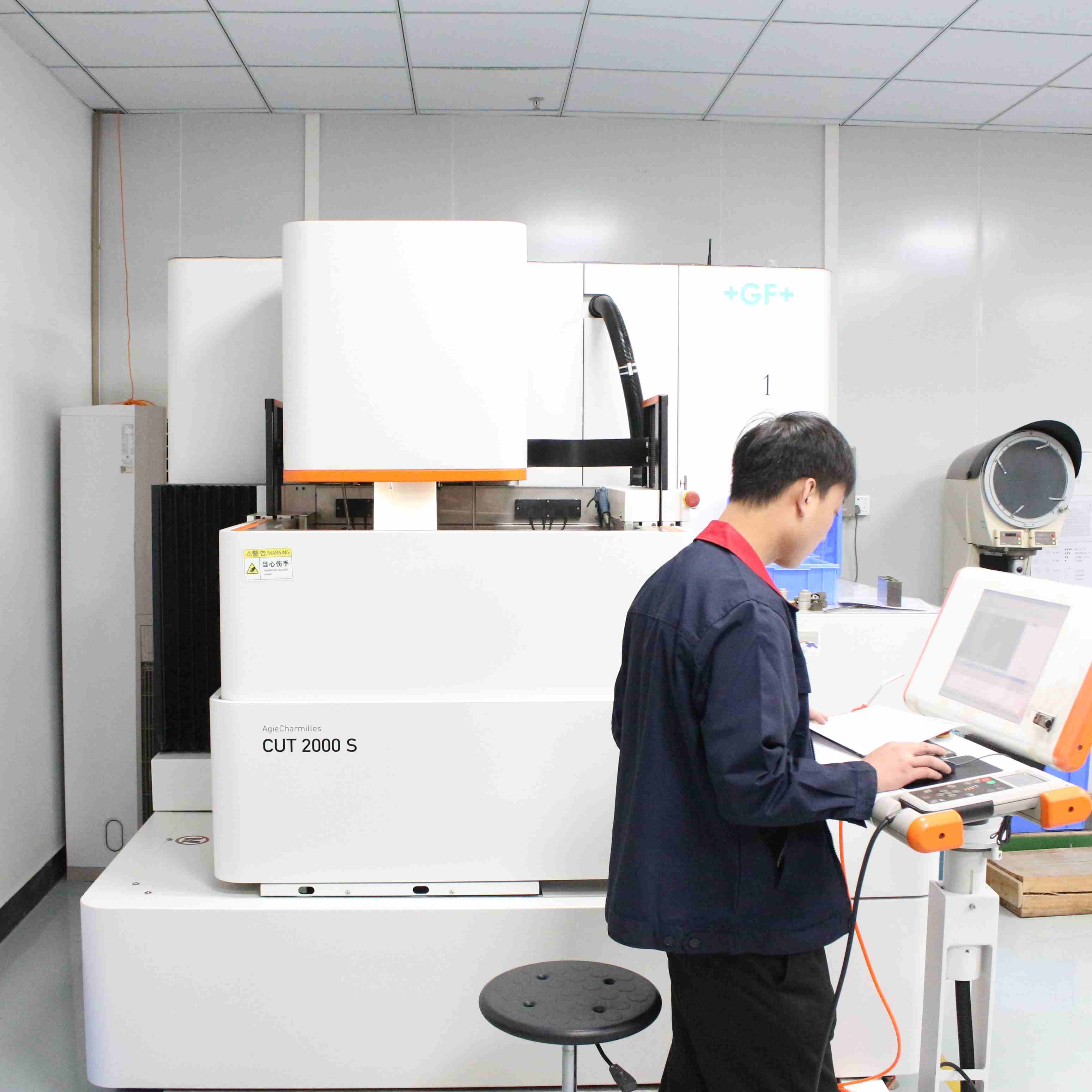
    Revealing How Million-Level AgieCharmilles and Waida Equipment Solve the ±0.002mm Precision Challenge for Punches and Inserts   In Dongguan, factories making stamping die components and punch processing can be found everywhere. When sourcing suppliers, many purchasing managers often face the same dilemma: small factories may quote very low prices, but the finished parts often have unstable tolerances. After assembly, the mold may get stuck or have uneven clearance, which eventually shortens the mold’s service life.   Why is it that the same drawing can result in such different performance in terms of precision and die life from one factory to another?   Today, we will not talk in vague terms. Instead, let us show you the “heavy-duty equipment” in our workshop—what exactly these million-level imported machines can bring to your parts.    Wire EDM Is Not Just “Cutting” — It Is Precision Crafting   Many people think wire EDM is only for “cutting a shape.” But in high-end stamping applications, wire EDM determines the contour accuracy and surface quality of punches.   In Dongguan, many small factories are still using medium-speed wire EDM or entry-level wire EDM machines. The surface finish is poor, wire marks are obvious, and a large amount of manual polishing is required afterward, which can easily cause deformation.   Our workshop is equipped with multiple high-end Swiss GF AgieCharmilles wire EDM machines, including the CUT 2000S, CUT 200Bp, and 240SLp, as well as Japanese Seibu M50 and Sodick AQ-400Ls.   Take the CUT 2000S as an example: its automatic wire threading system and intelligent discharge power supply not only improve machining efficiency by more than 30%, but also deliver mirror-like surface quality.   Precision Assurance Our wire EDM process can achieve a stable machining accuracy of ±0.002mm. This means that for your drawings with strict tolerances such as ±0.003mm or ±0.005mm, we can not only make them, but also produce them in volume with high consistency, without repeated rework or adjustment.    Micron-Level Final Correction — Optical Profile Grinding   Is wire EDM the end of the process? For truly precision punches, not yet.   We have introduced 2 Japanese Waida PGX-2500SP CNC optical profile grinding machines, along with 14 precision surface grinders. Waida’s position in optical grinding needs no introduction, and its grinding accuracy can reach 0.001mm.   When punches undergo micro-deformation after heat treatment, or when an extremely sharp cutting edge is required, the PGX-2500SP can perform ultra-precise material removal under real-time optical projection monitoring. This is a technical gap that small factories without high-end grinding equipment—relying only on experienced workers’ “manual feel”—simply cannot overcome.    Full In-House Process Control — No More Outsourcing Delays   In addition to the above premium equipment, we also have Mitsubishi EA8A EDM machines, WM831 cylindrical grinders, SC-305 centerless grinders, as well as Toyo SMAP polishing machines and Multi LAP lapping machines.   What does this mean?   It means that from wire cutting, EDM, internal/external grinding, to final polishing, we have achieved full in-house process control.   In Dongguan, many small factories need to outsource several processes to different partner workshops when handling complex orders. Once a dimensional issue occurs, everyone starts passing the responsibility around.   With us, the entire process is controlled in-house, so responsibility and quality are clear and traceable.  Final Words   The investment of millions in equipment is not for show. It is for the moment when you bring us a drawing with extremely tight tolerances or difficult-to-machine materials, and we can confidently say:   “We can make this precision stably.”   If your mold is suffering from short service life, unstable fitting clearance, or repeated trial-and-error adjustments during debugging, feel free to send us your drawings. We do not compete on the lowest price—we compete on who can make your molds last longer and perform more stably.  
  • Why "Wire EDM Profile Deviation ±0.002 mm" Is a Systems Engineering Challenge — Not Just a Machine Spec
    Why "Wire EDM Profile Deviation ±0.002 mm" Is a Systems Engineering Challenge — Not Just a Machine Spec Sep 04, 2026
    Meta description: A ±0.002 mm profile deviation on a wire EDM drawing looks like a single number, but it actually demands five tightly controlled links — wire, electricity, water, path, and environment. Here is why this specification is really a systems engineering problem, and what to look for in a precision wire EDM partner.   On any precision mold or stamping die drawing, you will often find a note such as: "Maximum allowable profile deviation: ±0.002 mm." For someone unfamiliar with wire EDM, that line can look like just another tolerance. But for an experienced slow wire EDM (WEDM) operator, those two microns are a wake-up call. They mean that from machine selection and electrical parameters to wire condition, water quality, cutting path, and even workshop temperature, every link in the chain must reserve room for those two microns.   Get any one of those links wrong, and the part will fail inspection. This article breaks down why ±0.002 mm is fundamentally a systems engineering challenge — and what a B2B buyer should expect from a serious precision EDM partner.   What ±0.002 mm Actually Means To put this number in perspective: l 2 microns = 0.002 mm l A human hair is roughly 70 microns in diameter l That means the allowable deviation is less than 1/35 of a hair's thickness No single component of a wire EDM machine, on its own, can hold a 2-micron profile. The number is only achieved when wire, electrical energy, dielectric water, tool path, and ambient conditions are all dialed in together. That is the essence of systems engineering: an end result that emerges from the whole, not from the sum of its parts. The 5 Critical Links in a Precision Wire EDM Process   1. Electrode Wire Selection and Tension Control The "cutting tool" in wire EDM is not a solid end mill — it is a brass or molybdenum electrode wire as thin as 0.10–0.30 mm. That wire already carries its own diameter tolerance. Why it matters: l If a Ø0.25 mm brass wire is actually 0.002 mm oversized, the discharge gap widens and the finished profile shifts outward. l If wire tension fluctuates, the wire vibrates during cutting, and that vibration transfers directly to the workpiece surface as waves or dimensional scatter. What good looks like: l Precision-grade electrode wire with tightly controlled diameter l Continuous wear monitoring with in-process compensation l An automatic tension control system that holds tension fluctuation within a narrow band even at high wire speeds This is one area where entry-level and high-end machines diverge sharply. Closed-loop tension is not optional for ±0.002 mm work.   2. Precise Matching of Discharge Parameters Wire EDM removes material through pulsed electrical discharge. Each pulse carves a tiny crater, and the depth of that crater is set by the energy of the pulse. The core trade-off: Higher discharge energy Lower discharge energy Faster cutting Slower cutting Rougher surface Smoother surface Larger profile deviation Tighter profile deviation   For ±0.002 mm profile accuracy, the finishing pass must run on very low energy: l Narrower pulse width l Lower peak current l Often a dedicated "non-electrolytic power supply" or "ultra-fine finish circuit" for the final skim cut The downside is well known: cutting time can 3–4x compared to a roughing cut. That is one reason micro-precision EDM work is never quoted cheaply — the machine time is real.   3. The Hidden Impact of Water Quality and Filtration This is the most overlooked link in the chain, and one of the most punishing when it is ignored. Wire EDM uses deionized water as the dielectric. The resistivity of that water directly controls the stability of the discharge gap: l Resistivity too low → discharge energy disperses → gap widens → profile runs oversized l Resistivity too high → discharge becomes unstable → wire breakage and abnormal sparking For ±0.002 mm, the typical control band is: l Resistivity held stably above 1 × 10⁵ Ω·cm l Resin tank replacement on a fixed schedule l High-efficiency filtration keeping the machining zone clean The condition of the resin tank and the micron rating of the filter elements show up, line by line, in the final profile accuracy. A shop that treats its water system as an afterthought cannot hold 2 microns.   4. Process Intelligence in Cutting Path and Stock Allocation Two experienced process engineers can be handed the same drawing, program two different paths, and get two very different results. Path planning is where experience shows up in the part. The standard multi-pass strategy for ±0.002 mm: 1. Rough cut — remove the bulk of the stock and release internal stress 2. Semi-finish cut — correct any deformation caused by stress release 3. Finish cut (skim cut) — reach the final size and surface quality Each pass has a precisely calculated offset, derived from: l Material thickness l Geometric complexity l The behavior of the specific machine If the offset is too generous, the finish pass cannot clean up the prior pass's marks. If it is too tight, the final pass may not reach the reference surface at all. The "feel" for these numbers is built from years of trial cuts and accumulated data — not from a parameter sheet.   5. The Influence of Temperature and Environment The last, and most underestimated, variable is the ambient environment. l A 2-micron error is perfectly acceptable in a 20 °C ± 0.5 °C constant-temperature workshop l In an uncontrolled environment, even ±2 °C of fluctuation can consume most of the tolerance through thermal expansion and contraction of the workpiece That is why precision wire EDM workshops invest in: l Constant-temperature air conditioning l Long equalization times before machining l Coolant and air-flow management around the work area A supplier that machines precision parts in a general factory floor — even with a great machine — will struggle to hold 2 microns consistently.   Why This Matters for Your Project If your drawing calls for ±0.002 mm profile deviation, you are not buying a machining service. You are buying access to a controlled system: l A machine with closed-loop wire tension l A generator with micro-finish circuits l A water system with stable resistivity l A process engineer who knows how to plan the path l A workshop that holds temperature steady year-round Any weak link, and the chain breaks. That is why some jobs are simply not something every factory can take, regardless of what their marketing says. Looking for a Precision Wire EDM Partner? At Dongguan HongYu Mould Co., Ltd., ±0.002 mm profile deviation is a daily production target — not a special request. Our capacity is built around: l AgieCharmilles, Sodick, and Waida high-end slow wire EDM platforms l A constant-temperature workshop with controlled humidity l In-house deionized water systems with continuous resistivity monitoring l A multi-pass cutting database refined over 19 years of export work l 19+ years of dedicated experience serving European and Japanese B2B customers in automotive, electronics, IC packaging, and industrial machinery   We work directly with mold makers, stamping die builders, and precision parts manufacturers who need tolerances they can actually rely on — and who need a partner that can explain, in plain language, where every micron of their tolerance is being spent.   Send us your drawing, and we will tell you honestly whether it is buildable, and how. 👉 sales01@dghongyumold.com for a feasibility review within one business day.  
  • How to Cut Tungsten Carbide Punches Without Cracking
    How to Cut Tungsten Carbide Punches Without Cracking Jun 26, 2026
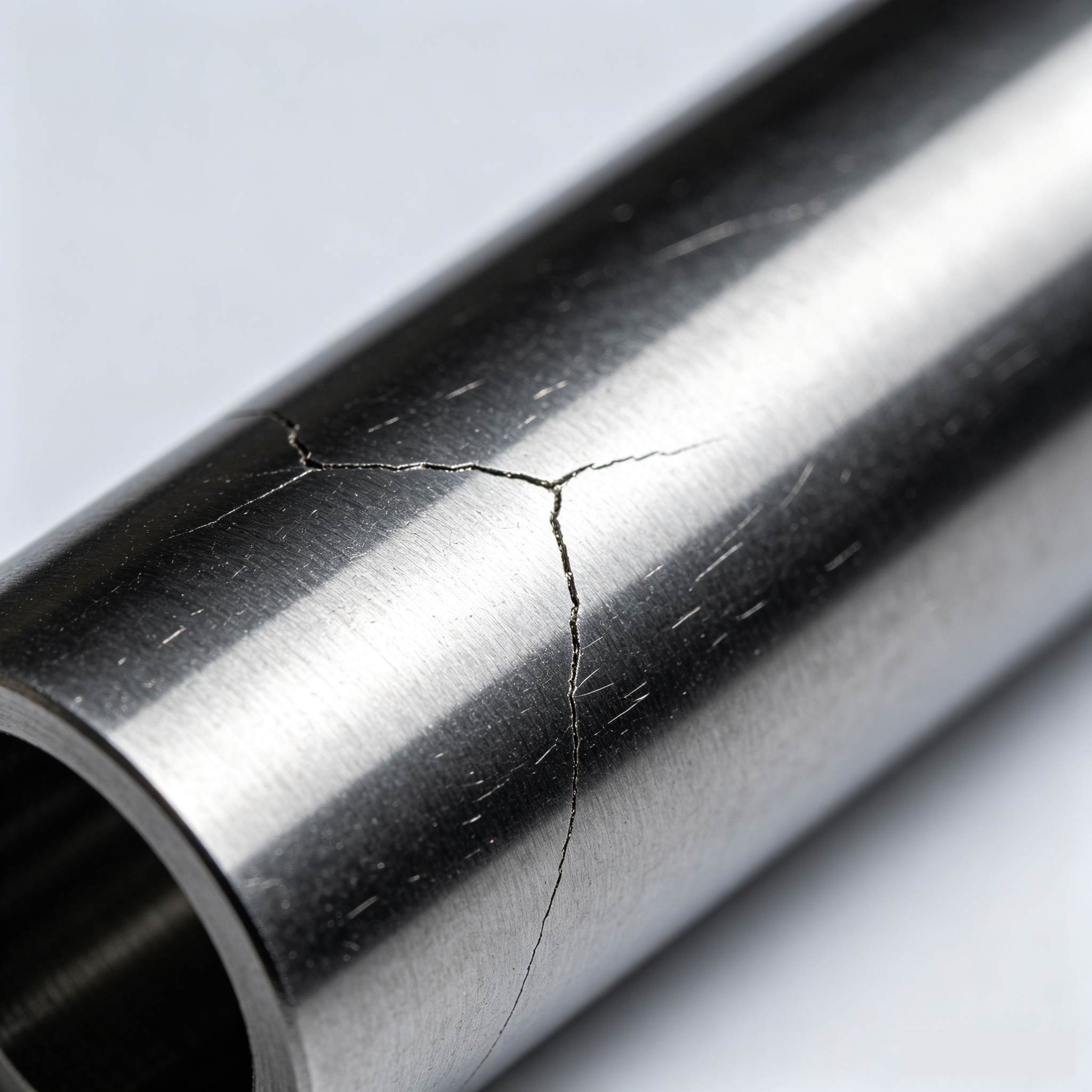
    Why is Tungsten Carbide Prone to Cracking?       Tungsten carbide (hard alloy) is produced by sintering tungsten carbide powder with cobalt binder. Its hardness can reach HRA 89-93, but its elongation is extremely low—in simple terms, it’s “hard but brittle.”     Wire EDM and conventional EDM work by eroding metal with extremely high-temperature electrical sparks. The localized, instantaneous temperatures can reach thousands of degrees, then rapidly cool in the dielectric fluid—this heating and cooling cycle generates thermal stress. If parameters are off, micro-cracks develop on the surface. When the punch is later used in stamping, these cracks propagate under force, causing chipping or complete breakage. Therefore, the key issue with cutting tungsten carbide isn’t whether it can be cut, but how to control heat input and cooling rates.      Wire EDM: Getting the Parameters Right is Paramount     We primarily use wire EDM for manufacturing tungsten carbide punches. The following parameters are non-negotiable:   Don’t Use Excessive Current     Many operators assume higher current means faster cutting. For tungsten carbide, higher current deepens the heat-affected zone and thickens the “white layer” (recast layer). This layer is a breeding ground for cracks.     Our approach: Use moderate current for rough cutting. For finishing, drop the current to a third (or lower) of the roughing value. It is better to make an additional pass than to cut fast and risk thermal cracking.   Keep Pulse Width Short     Longer pulse widths mean higher energy per pulse and faster erosion, but also more damage. We typically control pulse widths between 2–6 microseconds and use sub-2-microseconds for finishing.   Monitor Dielectric Resistivity     If the deionized water’s resistivity is too low, arcing can occur, damaging the work surface. We keep resistivity at 10–15 kΩ·cm; this is checked every shift and the resin is replaced as needed.   Maintain Stable Wire Speed     Too fast and the wire may snap; too slow and chip evacuation suffers. We set speeds between 4–6 m/min, based on wire size and part thickness, ensuring effective flushing without vibration.   Use Multiple Passes as Standard     We always run at least three passes on tungsten carbide punches: rough → finish 1 → finish 2. Cutting energy is reduced with each pass; the final pass is like a gentle “sweep,” producing a near-invisible white layer and an Ra better than 0.8μm.     EDM Drilling: Small Holes are the Most Challenging     Punches may need oil holes or vent holes as small as 0.3 mm—a job for EDM drilling.   The biggest challenge here is chip removal. If debris isn’t flushed, it causes repeated discharge on the hole wall, leading to surface burns or, in severe cases, outright cracking.   Our best practices:   Use straight copper tube electrodes—bent tubes will wander and burn the hole wall. Ensure sufficient flushing pressure so debris is pushed out effectively. Don’t feed too quickly; at the first sign of short-circuiting, retract immediately—never force the electrode.   Post-EDM: What Comes Next?     Cutting is not the end. Two steps are critical after machining:   Inspect the White Layer     We use a magnifier or metallographic microscope to check the edge; if the white layer is visible, we gently polish it off with fine sandpaper. Leaving the recast layer is a hidden trouble for future chipping.   Stress Relieving (Low-Temperature Tempering)     Tungsten carbide punches may retain residual stresses after cutting. If possible, we perform a low-temperature tempering (180–220°C) to effectively release internal stress and stabilize dimensions.     Summary     To “cut” tungsten carbide punches without cracking, it really comes down to three points: Don’t use excessive current; use more finish passes. Ensure effective cooling (flushing) and chip removal. Don’t use the punch straight after machining—inspect the white layer and relieve stress.   This is how we do it at our workshop. Clients call our punches durable and resilient—not because of any “secret trick,” but because we carefully control every process detail.   If you’re struggling with the yield of tungsten carbide punches, let’s discuss—no need for business, sometimes exchanging experience is priceless.

Need Help? Chat with us

leave a message
For any request of information or technical support, fill in the form. All fields marked with an asterisk* are required.
Submit
Looking for FAQs?
Contact us #
+86 769 832011519

Our hours

Mon 11/21 - Wed 11/23: 9 AM - 8 PM
Thu 11/24: closed - Happy Thanksgiving!
Fri 11/25: 8 AM - 10 PM
Sat 11/26 - Sun 11/27: 10 AM - 9 PM
(all hours are Eastern Time)

home

products

whatsApp

Contacts